
Key points:
Concrete is among Earth’s most used materials, second only to water. Cement, a key ingredient in concrete, is responsible for 8% of global carbon dioxide (CO₂) emissions. It is also one of the hardest-to-abate industries, with a fragmented supply chain of thousands of suppliers making decarbonization uniquely complex.
The Climate Pledge and MIT's Concrete Sustainability Hub are building an AI-powered playbook that uses generative and predictive AI to help architects, engineers, and producers identify and adopt lower-carbon concrete alternatives. The team aims to make the core capabilities of the playbook free and publicly available by 2027.
This joint action project funded by The Climate Pledge includes Amazon and Prologis and is the first step toward developing an MIT-led consortium to scale deployment of lower-carbon cement and concrete in North America.
When you think about curbing carbon emissions, you might consider cutting back on meat or car travel. But have you thought about the emissions associated with where you live, work, or go to school? It turns out that cement—a key binding agent in the concrete used to make many buildings—contributes 8% of global CO₂ emissions according to the World Economic Forum.
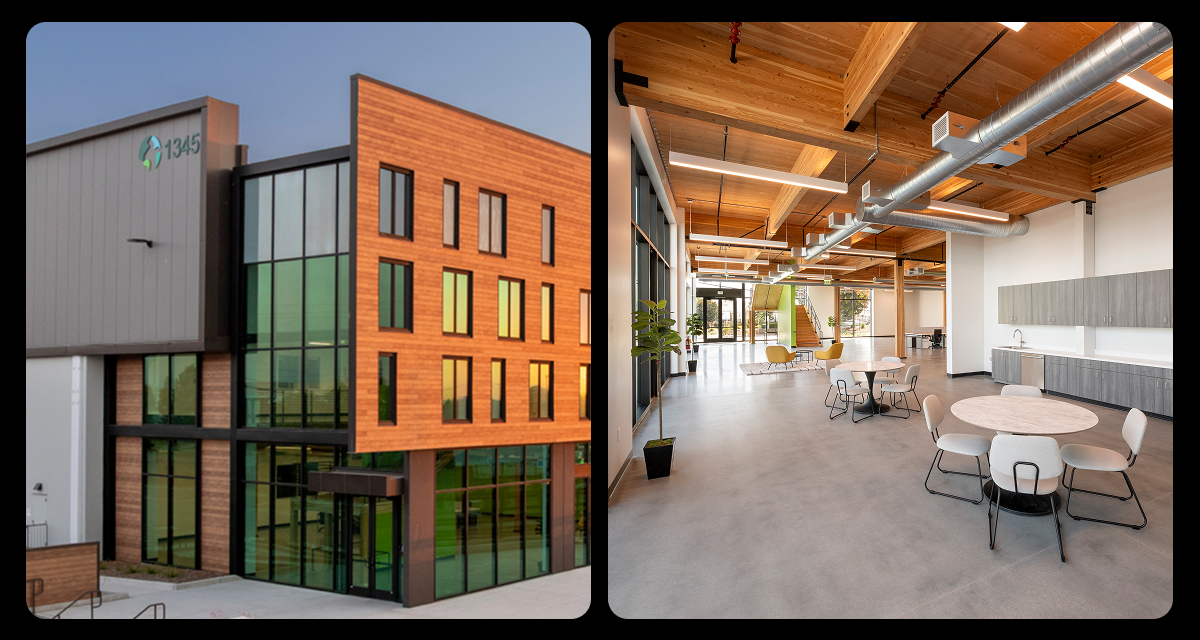
The carbon intensity of building materials is the kind of thing that keeps Rushyan Yen up at night. A senior technical program manager on Amazon’s Global Engineering, Materials and Sustainability team, Yen hopes to reduce the greenhouse gas emissions from the embodied carbon of Amazon’s logistics tech facilities. Many of these buildings are made with cement, which naturally emits carbon dioxide as part of its manufacturing process. In the U.S., about 80% of structural framing in larger buildings is made from steel or concrete.
“We can’t wait for the industry to come up with solutions for us to implement,” Yen said. Instead, she and her team find and test potential lower-carbon concrete solutions, vetting materials in a laboratory, and then in a series of targeted pilots over multiple years. The strongest candidates are considered for use in Amazon facilities.
It can be challenging for contractors, engineers, and architects to learn about lower-carbon concrete options. Unlike steel or glass, every concrete mix is different and is shaped by local materials, weather, regulations, and performance needs—complexity that makes AI well suited to identifying lower-carbon options. In fact, as Yen tests new materials, The Climate Pledge and the MIT Concrete Sustainability Hub are developing a dynamic playbook that uses AI technology to make users aware of the lower-carbon concrete solutions already on the market—and those coming soon.
The concrete carbon footprint: a hard-to-abate industry
We can reduce our individual environmental impact by recycling or remembering to shut off the lights when we leave the house. But it’s harder to tackle the footprint of industries like concrete. A significant amount of the concrete industry’s carbon footprint comes from the chemical reaction used to make clinker, cement’s key ingredient. Even if cement plants ran entirely on renewable electricity, it would be impossible to avoid all of these process emissions.
Concrete must also meet strict safety standards. Local materials, weather, transportation distances, regulations, and structural requirements all influence the final mix, creating millions of possible combinations.
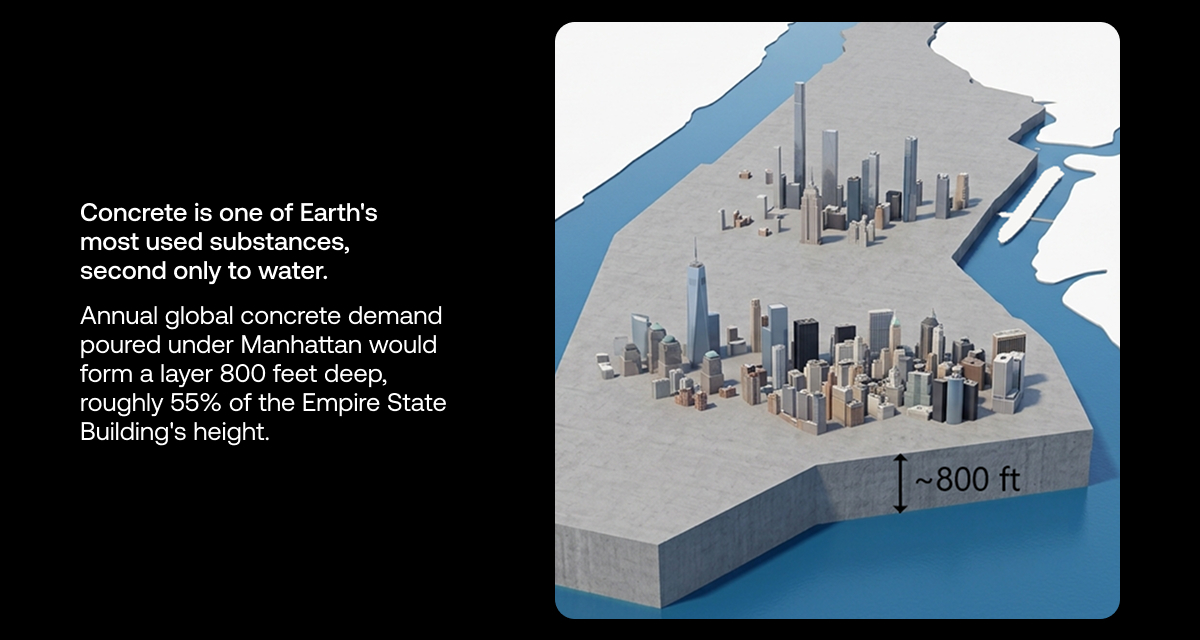
Still, concrete remains essential to modern construction: It is durable, reliable, widely available, and relatively affordable. In fact, concrete is among Earth’s most used materials, second only to water.
“The two biggest threads are: First, how do we make sure that all the stakeholders know what things they could be doing to [adopt lower-carbon concrete options]? Second, how do we reduce the perceived risk of using these new solutions?” said Randolph Kirchain, director of the MIT Concrete Sustainability Hub.