Jun 24 2026 - Global

Laneshift proves electric freight is possible anywhere

Transportation & Logistics Decarbonization

By Sally Fouts

/

Director, The Climate Pledge

Three years since its inception, Laneshift, an initiative between C40 Cities and The Climate Pledge, has made real progress accelerating the electrification of trucking in Latin America and India. Here’s what comes next.

When The Climate Pledge and C40 Cities launched Laneshift in 2023, road freight was responsible for over 2.2 billion metric tons of carbon dioxide (CO₂) annually—more than air, sea, and rail freight combined. In India, Brazil, and Mexico, freight volumes were projected to surge over the coming decade. The question wasn't whether electric trucks could work. It was whether they could work in those locations—in emerging economies and on routes where infrastructure didn't yet exist. Laneshift was born from the idea that if electric trucks could work in challenging geographies, we could make the case for deploying them anywhere and everywhere. 


Three years later, we know this is possible.
Play
Watch now
The Laneshift Impact Report documents what the collaboration between The Climate Pledge and C40 Cities has achieved—and lays out the roadmap for the future. The results speak for themselves: According to C40, the initiative has helped deploy over 300 electric vehicles (EVs) and avoid 3,215 metric tons of CO₂ (projected to reach 31,007 metric tons by 2035). It has also helped install 46 fast-charging bays across Latin America and fueled a total of 1,151 job years—140% more than diesel equivalents would have generated.
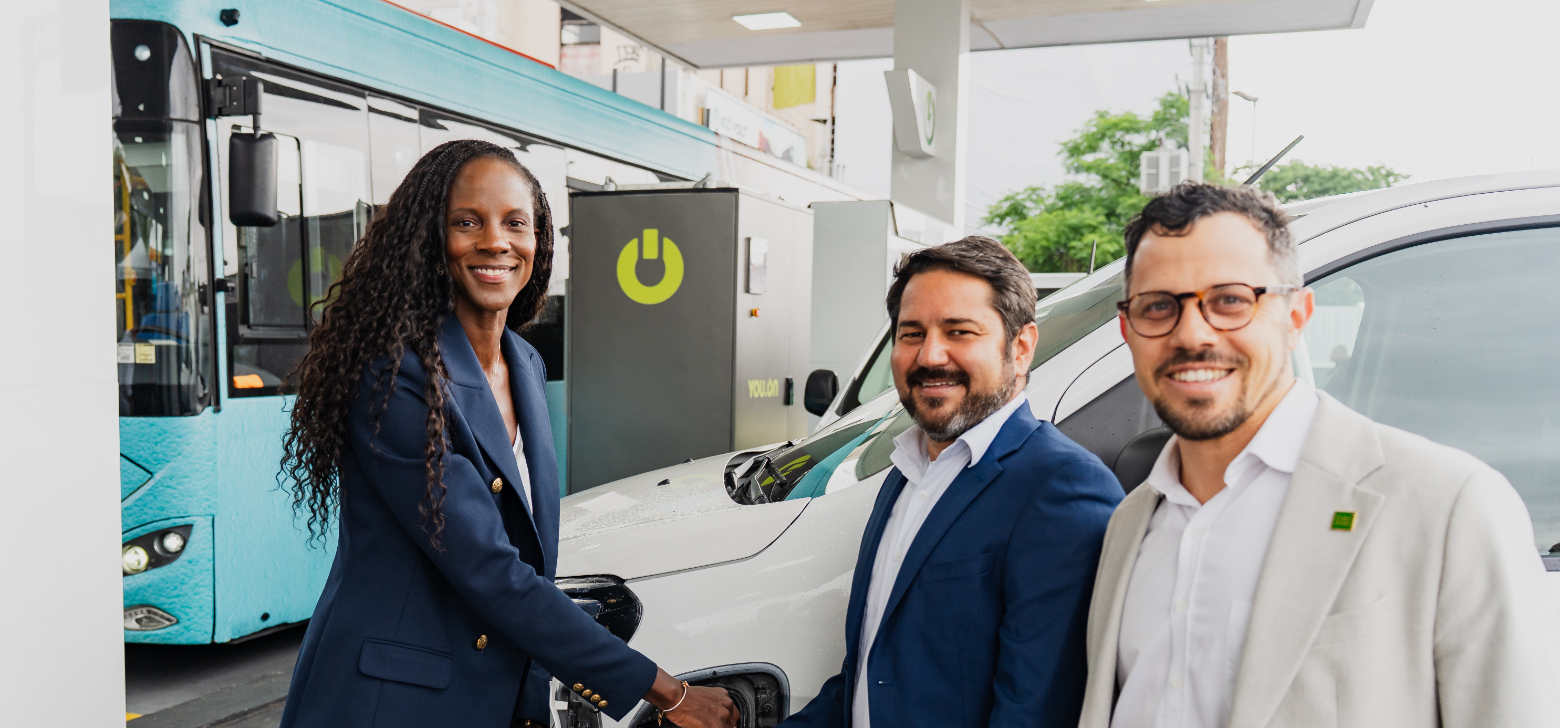
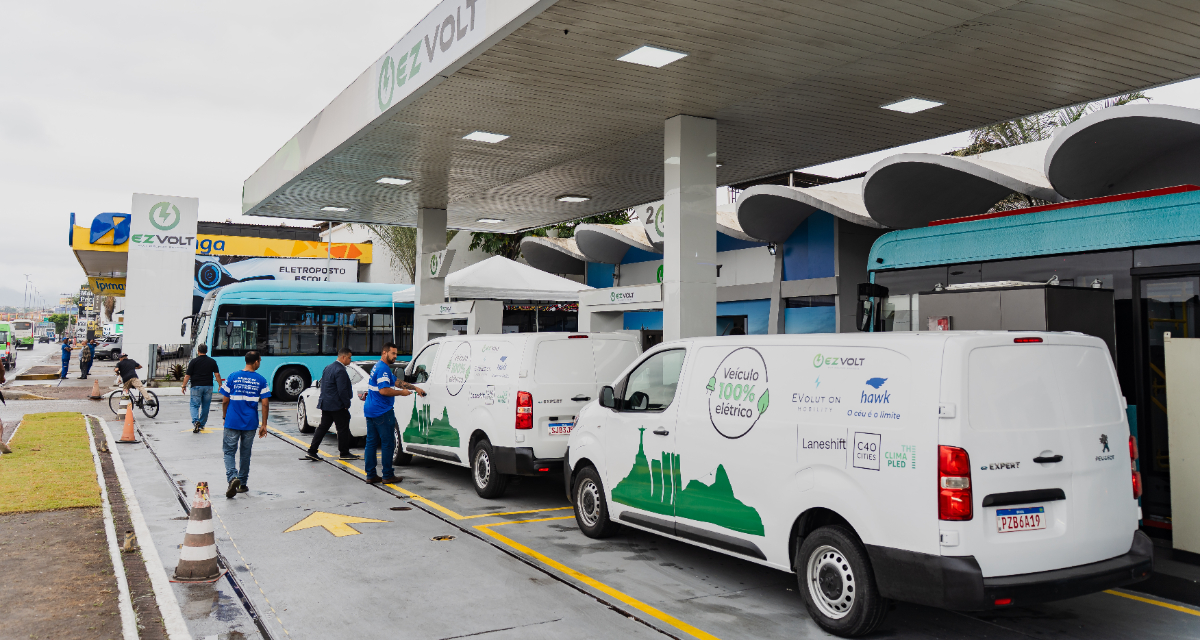
In three short years, Laneshift has accelerated the development of EV infrastructure and the deployment of EV trucks across India and Latin America, including in Rio de Janeiro, where it launched two public charging hubs and announced a commitment to implement 15 public charging stations for electric freight by 2028.

From ambition to asphalt
Laneshift's approach is built on a simple insight: Electrifying freight requires more than vehicles. It needs infrastructure, policy, finance, and proof. Over the last three years, Laneshift has brought together Climate Pledge signatories with the expertise to work together and deliver on these topics, including shippers, manufacturers, policymakers, charging point operators, and financiers. The initiative was designed not just to prove a technology, but also to build the confidence needed for ecosystem-wide adoption—turning isolated pilots into self-sustaining commercial momentum.

In India, Laneshift and its implementation partner Billion-E deployed 20 heavy-duty e-trucks along the 350-kilometer Bengaluru-Chennai corridor, completing over 600 commercial trips and driving more than 200,000 kilometers. EV trucks were able to match diesel truck travel and turnaround times. The project demonstrated the potential of these efforts to further scale by driving an e-truck 6,500 kilometers along the Golden Quadrilateral, connecting Delhi, Mumbai, Chennai, and Kolkata. The data from these trials has already been used to secure five-year contracts with major shippers, inform national policy, and led to over 200 truck orders. 

Laneshift's work in Mexico City brought together government and industry stakeholders to install the largest public charging hub in the country and make electric trucks more affordable for small and medium businesses.
In Mexico City, Laneshift and VEMO Charging Network opened the country's largest public EV charging hub—34 fast-charging bays serving fleets from Climate Pledge signatories like Heineken. The team is also working with Mexico's national development bank, Nacional Financiera (NAFIN), to design the country's first government-backed finance mechanism for EV freight to help small businesses make the switch. This financing is expected to move forward the point at which the total cost of ownership (TCO) for EV trucks, including initial purchase and lifetime operations, becomes cost-competitive with diesel trucking by five years.

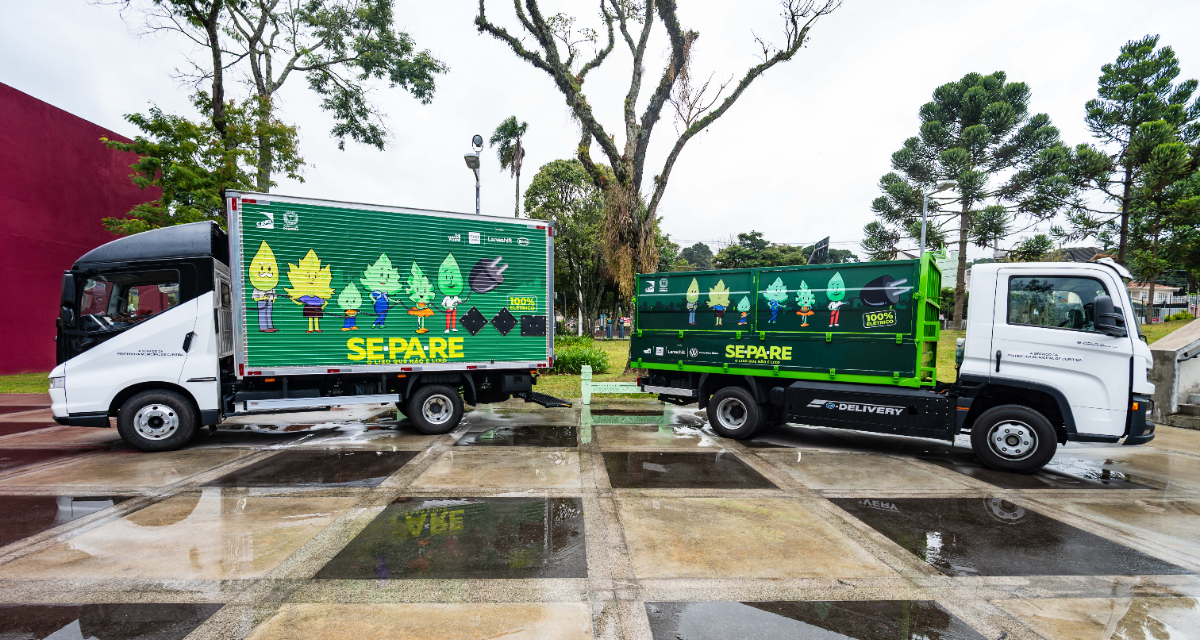
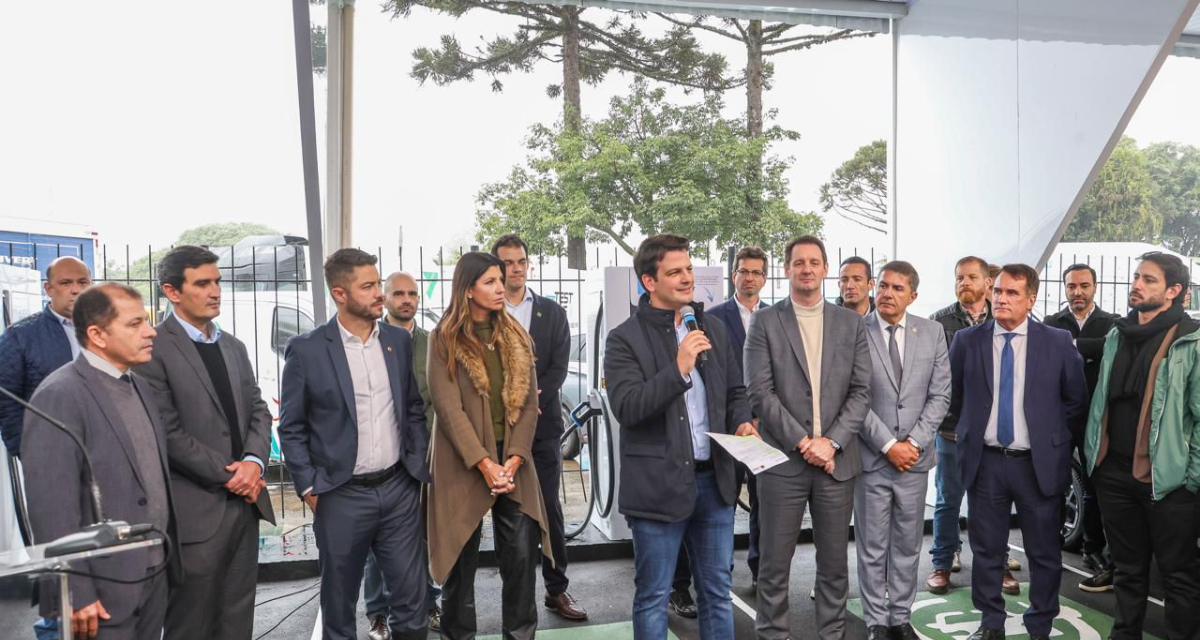
In Brazil, two charging hubs in Rio de Janeiro supported a demonstration with 110 vehicles logging over 3,675 charging sessions as of May 2026. In Curitiba, a year-long municipal fleet demonstration showed that electric trucks can finish their daily routes with battery to spare—and cost up to 78% less to power than diesel. This data convinced the city to release a tender for its first permanent public charging hub. 
In Curitiba, Brazil, Laneshift proved the feasibility of using electric trucks for waste collection.
“Laneshift proves that when cities, businesses, and financial institutions work together, we can accelerate the freight transition years ahead of schedule,” said Mark Watts, executive director of C40 Cities. “The over 300 electric vehicles on the road today are just the beginning—our model is designed to be replicated in cities worldwide."  

Why this matters beyond carbon
The benefits extend well beyond reducing carbon emissions. Switching from conventional trucks to EVs reduces freight emissions like nitrogen oxide (by 100%) and fine inhalable particles known as particulate matter 2.5 (by 77%). These pollutants affect children, the elderly, and communities living near busy highways and roads. Laneshift initiatives have already reduced nitrogen dioxide emissions by 4.7 metric tons. 
In May, the city of Curitiba launched its first public fast-charging hub for freight.

The transition to electric freight also brings new economic opportunities. Research from C40 Cities, the International Finance Corporation (IFC), and Ricardo projects that the EV charging market across Brazil, Mexico, and India will result in approximately $3.8 billion in investment by 2035—a clear signal of the scale of opportunity ahead. And a study from C40 Cities, Arup, and the University of Exeter found that there are clear actions cities can take to further accelerate the transition to EV freight and trucking in emerging markets like India. Laneshift provides cities with exactly the kind of policy packages and guidance that trigger these self-reinforcing adoption cycles. For example, in Curitiba, Brazil, Laneshift worked with city officials to secure policy incentives like waivers for parking fees that reduced operational costs by up to 50%, a margin that benefited over 100 commercial EV trucks. 

What comes next
The Climate Pledge and C40 Cities anticipate significant growth in the coming years. In Brazil, the e-Dutra project aims to enable over 1,000 electric trucks every day on the Rio-São Paulo corridor by 2030. In India, Laneshift's data will inform a national framework for EV highway corridors, deploy electric trucks, and work on innovative finance mechanisms and partnerships. In Mexico, new financing will flow to small businesses by 2027. This is a model built for replication—and Climate Pledge signatories are leading the charge to make it happen.

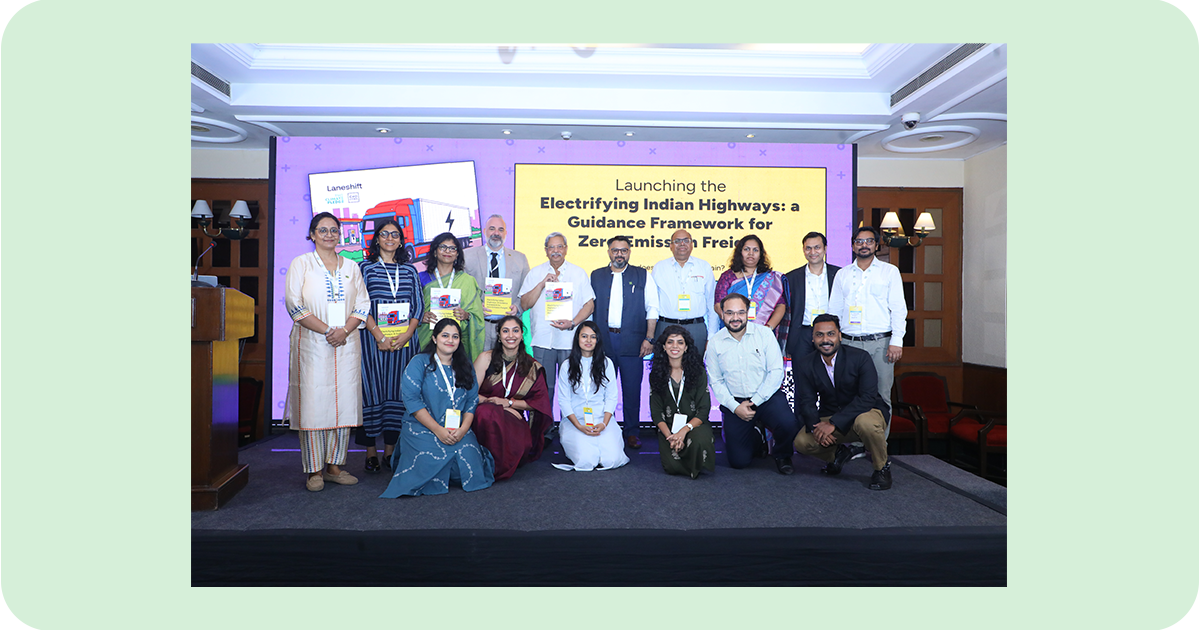
In May, Laneshift launched a National EV Highway Guidance Framework, which translates findings from the Bengaluru-Chennai corridor demonstration into a replicable model for electrifying freight highways across India.

“In just three years, Laneshift has moved from vision to measurable impact—putting zero-exhaust emission vehicles on the road, reducing CO₂ emissions, creating new jobs, and building a growing network of charging infrastructure across Latin America and India,” said Sarah Dimson-Tararuj, head of strategic projects & programs for The Climate Pledge. “Through The Climate Pledge, we’re committed to continuing this momentum and helping to further unlock the transition to zero-exhaust emission freight at scale.” 

Ready to join this effort? Visit the Laneshift Impact Report hub to explore the full Laneshift Impact Report or head to our Laneshift project page to learn how your organization can get involved, and see what's possible when the private sector and cities work together to electrify freight.

Learn more about The Climate Pledge’s joint action projects.