Sep 15 2026 - Global

4 takeaways from the 2026 Climate Pledge Report

Carbon Neutrality Innovation

By Sally Fouts

/

Global Leader, The Climate Pledge

Seven years in, signatories of The Climate Pledge are showing what’s possible on the path to net-zero carbon emissions.

Key takeaways:

  • The Climate Pledge Report is available now. Amazon prepared this report in collaboration with Global Optimism and featured signatories.
  • The report summarizes the collective progress of more than 700 signatories working toward net-zero carbon emissions.
  • Data shows that Pledge signatories are decarbonizing faster than their peers, translating shared ambition into measurable progress at scale.

1.  Climate commitments continue to grow

The Climate Pledge was founded in 2019 on a simple but urgent premise: The world can’t wait to make climate progress. Since then, the Pledge has grown to more than 700 signatories across 49 countries and territories and 62 industries. The combined revenue of Pledge signatories is $3.8 trillion, a scale that would rank the community as the world's seventh-largest economy.

That scale is the point. When hundreds of companies commit to the same target, on the same timeline, there’s meaningful change. Together, they can help advance new technologies, strengthen supply chains, and open opportunities across industries.

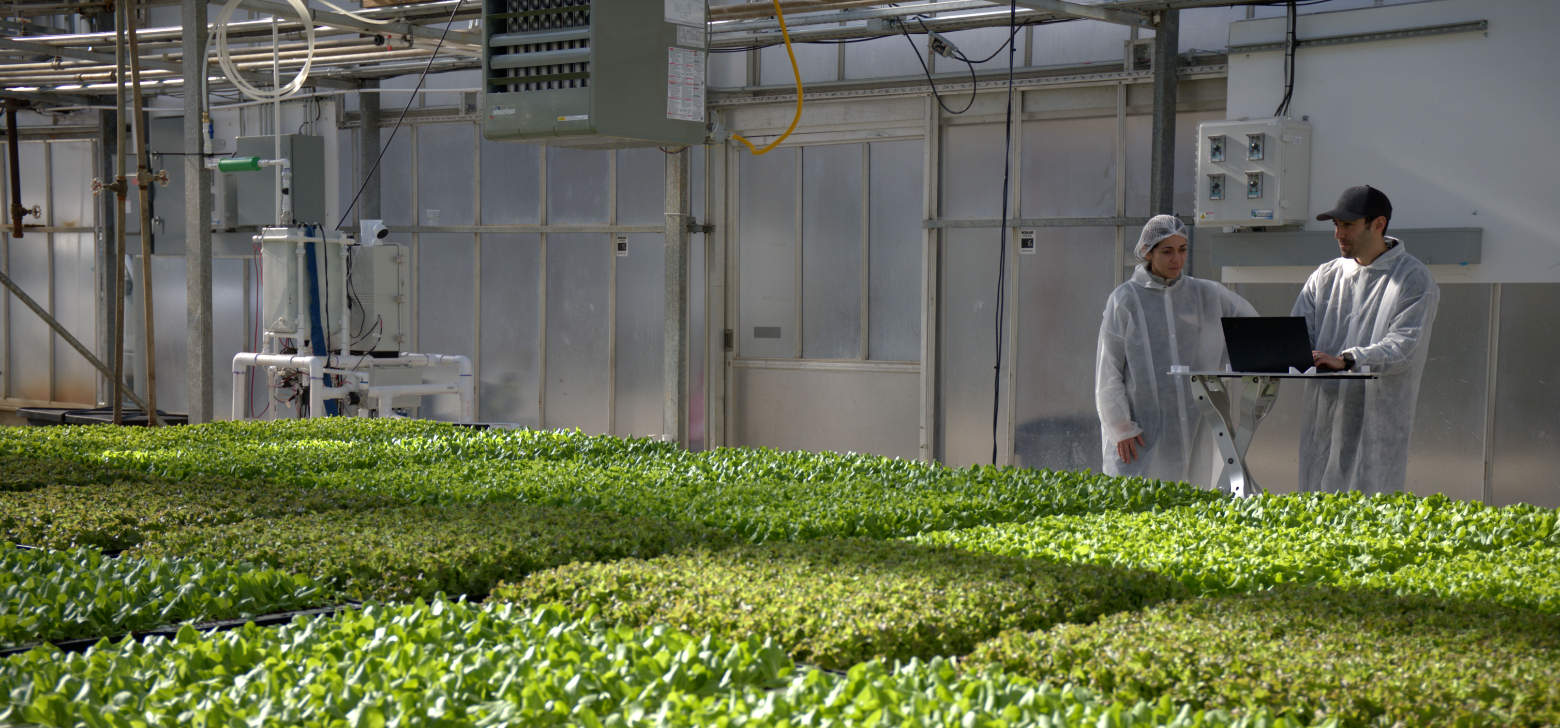
Companies are staying the course on their climate commitments with 107 companies joining the Pledge last year, a 19% increase over 2024. Many of those signatories are from hard-to-abate and underrepresented sectors. In 2025, the Pledge welcomed 51 new fashion and beauty brands, bringing the sector total to 60, and deepened its presence in Latin America and Asia Pacific, where signatories grew 164% and 24% from 2024 to 2025, respectively. A larger, more diverse community means more shared knowledge, more scalable solutions, and more capacity to tackle decarbonization challenges that no single company can address on its own.

A total of 107 companies signed the Pledge last year, many from hard-to-abate and underrepresented sectors.
2. Signatories are outpacing their peers

Signatories collectively reduced their reported operational carbon emissions by an average of 11%1. That represents 14 million metric tons of carbon dioxide equivalent (CO₂e) from direct operations and purchased energy, equivalent to avoiding the emissions that would be created by gas-powered cars driving 35.6 billion miles. Signatories also reduced industry reported emissions faster than companies outside the Pledge, which saw an average 7% reduction over the same period.

That gap suggests something real: A public, time-bound pledge, backed by a community of peers, helps signatory companies achieve faster, consistent progress. And the average only tells part of the story. The median reduction in operational carbon emissions was 21%, meaning a large share of signatories are decarbonizing even faster than the average. Three in four signatories reduced emissions from direct operations and indirect emissions from purchased electricity, heat, steam, and cooling. Dozens cut emissions by half or more. By committing to net-zero carbon by 2040, signatories are projected to eliminate at least 2.6 billion metric tons of CO₂e annually, roughly equivalent to a third of the carbon absorbed by the world's forests each year.

3. Where progress is and where the hard work remains

Indirect emissions from purchased electricity, heat, steam, and cooling saw the steepest declines, down 35% on average, driven by renewable energy procurement. But emissions from direct operations, like fuel combustion and industrial processes, declined 4% on average. That smaller figure reflects the reality companies working to decarbonize are facing: The toughest emissions to cut require fleet electrification, redesigning operational processes, and technologies that are still scaling. It’s exactly the kind of challenge that gets easier through joint action projects, where signatories pool demand, de-risk emerging technology, and build replicable models together.
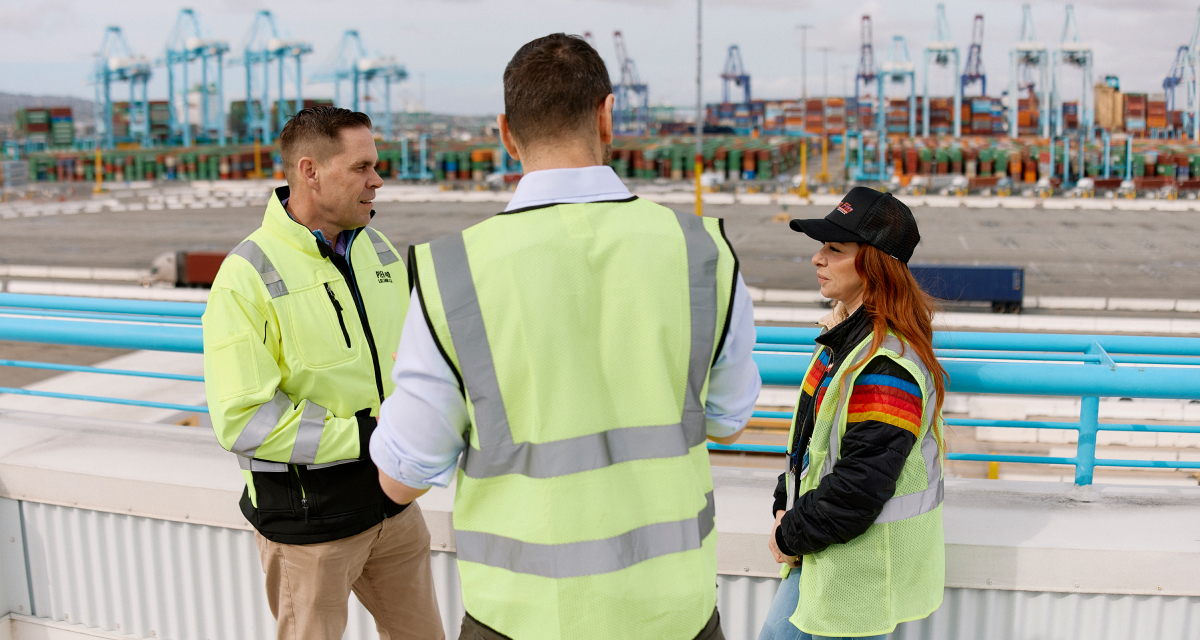
Joint action projects like the Electrifying Drayage Alliance bring companies together to tackle shared decarbonization challenges.

4. Joint action is turning shared barriers into shared solutions

This is the kind of collaboration The Climate Pledge is built to support, by bringing companies together to work on common problems through joint action projects. There are 33 projects to date, supported by 122 signatories, all focused on shared decarbonization challenges. In 2025, nine projects brought together 44 signatories to advance lower-carbon industry solutions, including: 

  • Electrifying Drayage Alliance (EDA): Launched in 2025 with Smart Freight Centre, the EDA unites more than 45 companies to accelerate electric drayage, the short-haul movement of containers between ports and warehouses. It is a practical first step for electrifying heavy-duty freight, with predictable routes and manageable mileage, contributing to cleaner air for port communities.
  • Laneshift: With C40 Cities, Laneshift deployed 357 zero-tailpipe-emission electric trucks across India, Mexico, and Brazil, avoiding 3,215 metric tons of CO₂e in 2025. Highlights include a first-of-its-kind e-truck highway demonstration in India, the country's largest charging hub in Mexico City with VEMO, and Brazil's e-Dutra Coalition targeting 1,000 daily electric trucks by 2030. These investments also generated 1,151 job-years, roughly 140% more than equivalent diesel freight.
  • Buildings decarbonization programs: Signatories are cutting embodied carbon and improving efficiency in buildings. With funding from the Pledge, the U.S. Department of Energy's Commercial Heat Pump Accelerator entered phase 2 in November 2025, targeting units that cut HVAC energy use 20% to 50%. A parallel mass timber effort aims to support standardizing components that reduce embodied carbon 35% to 65% compared with steel and concrete.
  • Lower-carbon concrete: The Climate-Smart Concrete initiative, led by the MIT Concrete Sustainability Hub, is using generative artificial intelligence to build a dynamic playbook to enable at least a 20% carbon reduction against specific regional baselines in every North American market. The Sustainable Concrete Buyers Alliance, meanwhile, has engaged 33 companies, including 18 top Amazon suppliers, to combat the carbon emissions of concrete (7% to 8% of global emissions), and aggregate demand at scale.

Get the full picture in The Climate Pledge Report.

The Climate Pledge Report covers data through June 2026 and includes joint action progress, signatory milestones, and action from across the community. 

1 Based on Scope 1 (emissions from direct operations) and Scope 2 (emissions from purchased electricity) analysis of 119 signatories representing approximately 90% of publicly available signatory revenue, data reported to a third-party database of company-reported greenhouse gas emissions from 2021 to 2024.