Story 8 - Mar 25, 2026 - Brazil

To Do Green: The future of logistics is about more than cleaner vehicles

Featuring

Transport Clean Energy

By Paula Simões

/

Founder and CEO, To Do Green

Founded in 2021, To Do Green is an all-electric logistics company operating integrated first mile, middle mile, and last mile services in Brazil. It now serves 193 cities, pairing emissions reductions with social impact. Learn why it signed The Climate Pledge.
Read story in Portuguese


Logistics is often framed as an emissions problem. It is also a structural and human one. That is the lens through which To Do Green was built, and why joining The Climate Pledge felt less like a new commitment and more like a public declaration of one we've held since day one.

Born from a moment of clarity

To Do Green was founded in the middle of the pandemic. Delivery drivers were considered "essential workers," but many were treated like they were invisible. Some were exposed to COVID-19 every day, without adequate infrastructure, support, or recognition.

In that moment, something became clear to me: The challenge of logistics—the flow and storage of goods, services, and information from origin to final consumption—is not only environmental. It is also structural, and human. We aspire to reduce emissions, and we want to conduct business in a sustainable, ethical way, and treat our workers with dignity and respect.

We started with a single shipping container as our first operational base. From there, we proved our business model in the real world before scaling it. That same conviction has guided every decision since: Logistics can be efficient for companies and a dignified experience for the people on the ground.

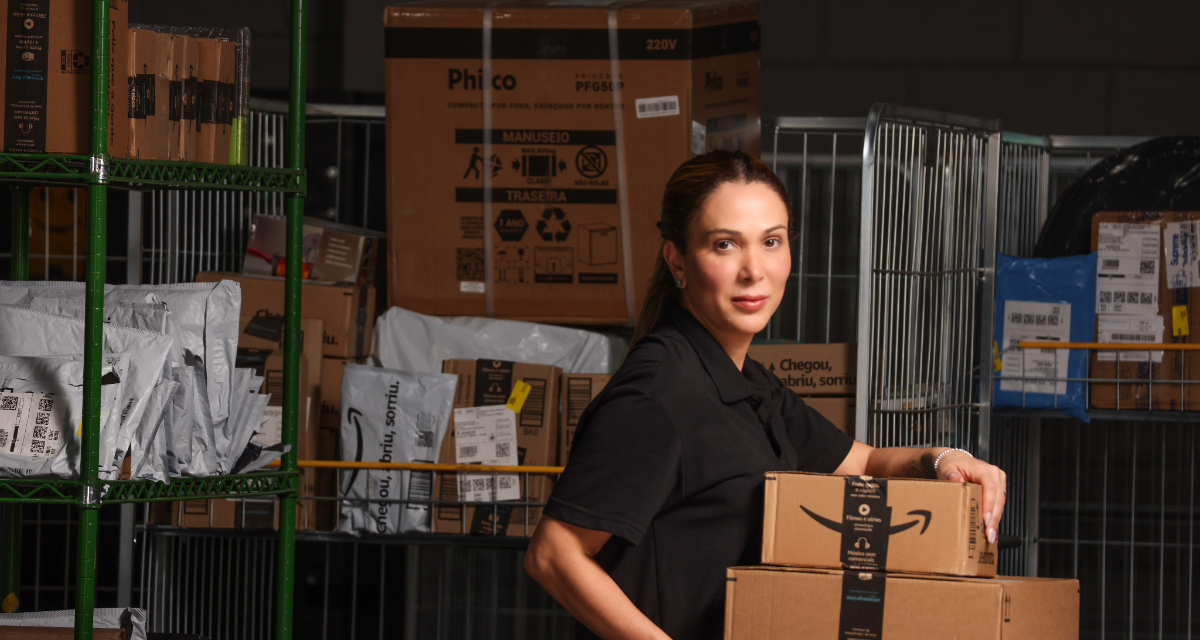
Leadership that understands the operation from the ground up: CEO Paula Simoes sometimes fills in as a delivery driver at To Do Green. Photo Credit: Karime Xavier.


I've been hands on from the start, serving as a station lead, working alongside our operations team, and stepping in as a delivery driver to keep service running. The idea that leadership must understand operations from the ground up has shaped our culture. Drivers are central to our purpose.

Proving what's possible, at scale

Brazil is not a small test market. It is a continent-sized country with long distances, complex routes, and uneven infrastructure. Scaling electrification here is a daily operational challenge.

As part of our exchange point (EXPT) project, we expanded service to São Paulo's North Coast. Through careful planning and disciplined execution, we extended the service radius for electric vehicles from approximately 18 to 50 miles, crossing the Serra do Mar, a steep coastal mountain range that has influenced logistics decisions in Brazil for decades.

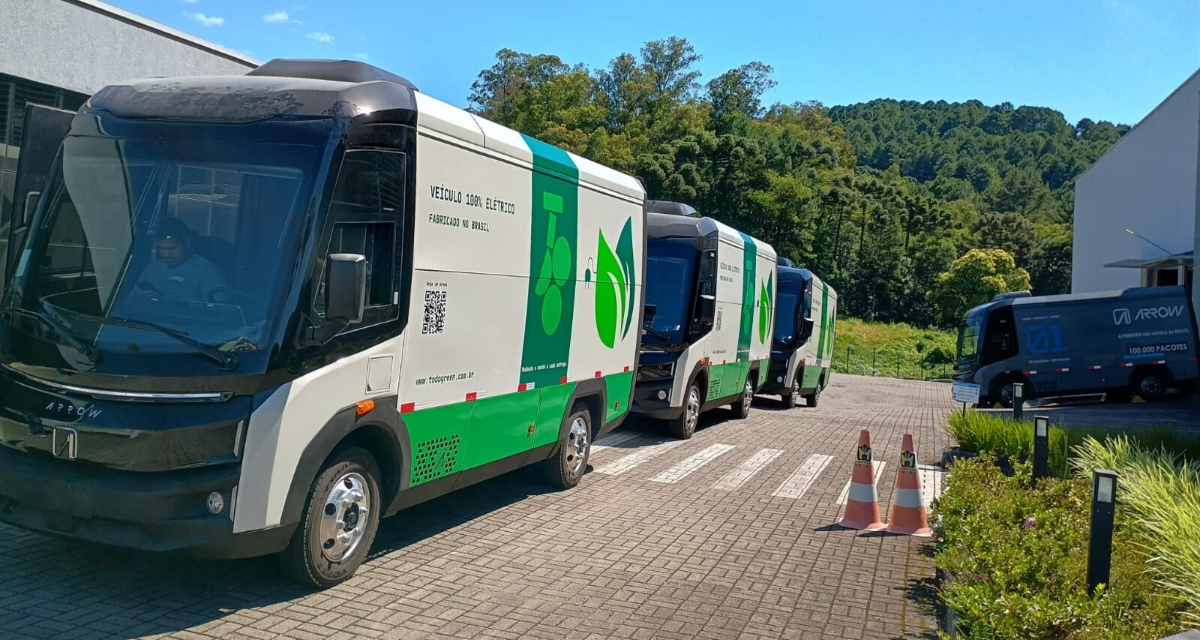
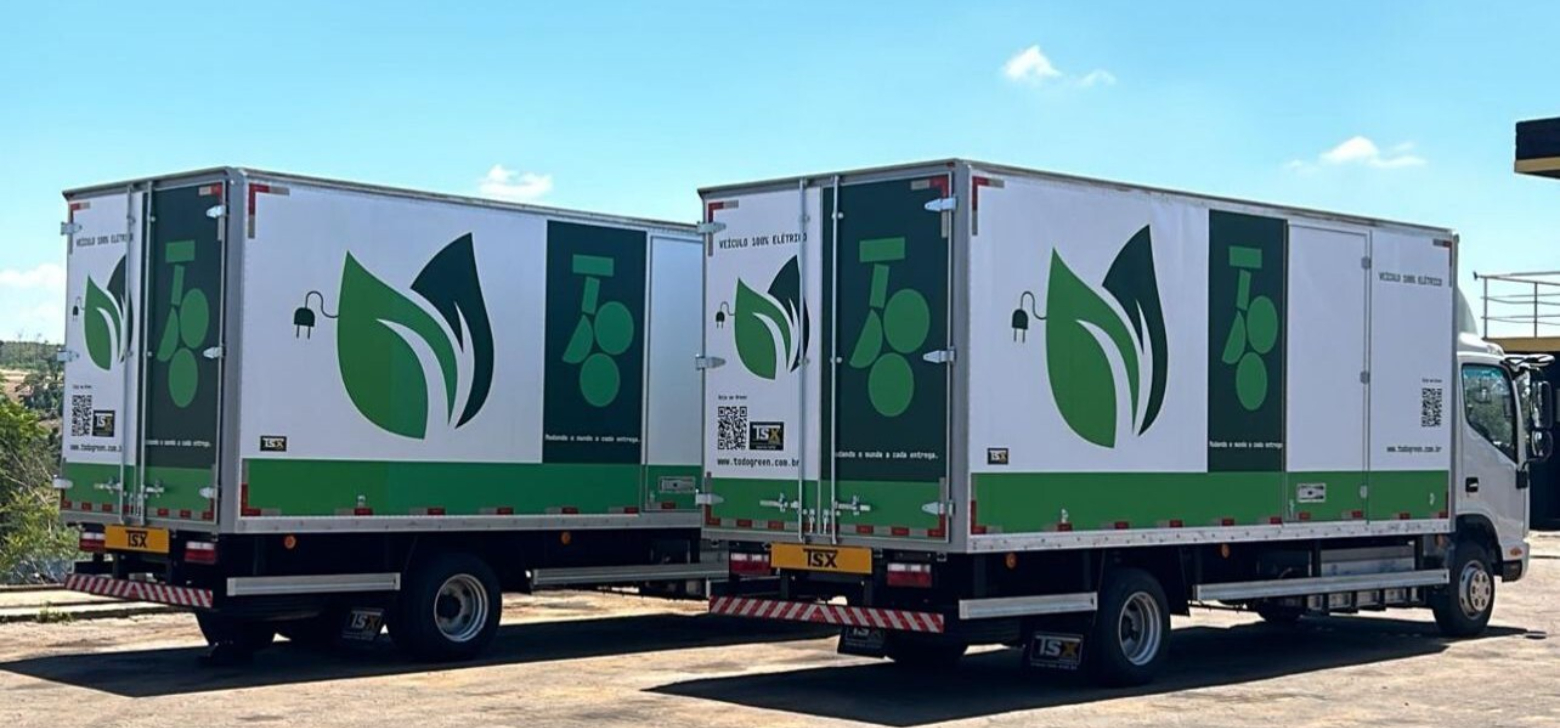
Today, To Do Green operates 30 stations serving more than 193 cities across Brazil. Our all-electric fleet includes 251 electric vans, 286 electric motorcycles, and four electric trucks, covering first mile, middle mile, and last mile operations. Since our founding, we have grown from a single container to a network that demonstrates, every day, that an all-electric logistics operation can be economically viable at scale.

“What we've learned: Electric logistics is absolutely possible if you treat it as an operational system, not a marketing claim. The details matter. The planning matters. Getting it right is what makes electrification real.”

Paula Simões

Founder and CEO, To Do Green

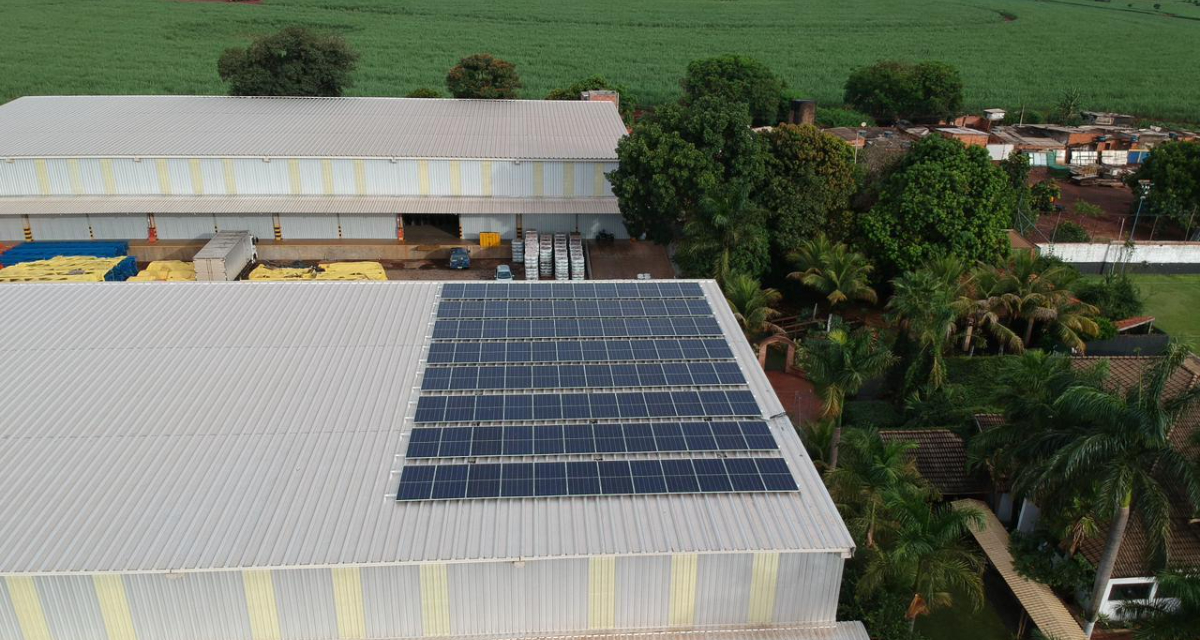
To Do Green is aiming for 70% of its delivery stations to operate on renewable energy, with solar panel installations already underway. Photo Credit: Karime Xavier.

Why The Climate Pledge

Joining The Climate Pledge is not a change in direction for To Do Green. It is the public formalization of a commitment already embedded in our business model.

We believe economic growth and decarbonization are not opposites. We know road logistics is one of the largest global emissions drivers, and that transformation must happen where the impact is greatest. And we believe that the people at the edge of the operation deserve to be part of the solution, not left behind by it.

The Climate Pledge strengthens our accountability in four concrete ways: It provides us with structured climate governance, public goals and a clear roadmap, transparency through emissions accounting, and deeper integration of sustainability into our strategy and finances. That framework pushes us further—and holds us to a standard that matches our ambition.

To Do Green's all-electric fleet includes 251 electric vans serving more than 193 cities across Brazil. Photo Credit: Karime Xavier.

What we're building next

We are simultaneously advancing on three fronts:

  • First, emissions accounting and governance. We are structuring our inventory to align with Global Reporting Initiative (GRI) standards, building the processes and governance needed to bring full transparency as we grow.
  • Second, prioritizing renewable energy at our sites. We have begun installing solar plants at our warehouses and we are aiming to have 70% of our sites operating on renewable energy by the end of 2026.
  • Third, scaling electrification where the impact is largest. The biggest emissions opportunity in logistics is not only in the last mile; it is along road corridors and the middle mile. That is where we are focusing our next cycle of expansion.

Sustainability at To Do Green is threefold: environmental, economic, and social. Our social commitment starts in leadership, where 50% of positions are held by women. Women currently represent 31% of our workforce in operations, and our goal is to reach 50%—well above the Brazilian logistics sector average of 17%, and a reflection of our commitment to gender equity. We see this as both a moral priority and a performance advantage: Diverse teams improve safety, execution quality, and long-term resilience.

The future of logistics

The future of logistics is not only electric. It is structured. Governed. Measurable. Replicable.

By joining The Climate Pledge, To Do Green is making public what already guides our strategic decisions: to scale while reducing real emissions and without losing the human dimension of the operation—because the transition to a low-carbon economy will only be durable if it is also equitable.

We are proud to stand alongside the companies in this coalition. And we are ready to do the work.

To Do Green joined The Climate Pledge on Sep 12, 2024.

Read
Looking for more?
Climate Justice Extreme Weather
Father and daugther walking in their farm.

6 episodes

Future Forward documentary series

Peek through the lens of critically acclaimed directors as they reveal how Pledge signatories are innovating to safeguard our shared landscapes, resources, and potential.

View series
Climate Justice Environmental Justice
Asha Stuart picture.

9 episodes

National Geographic Society series

Journey across the world with 15 multi-talented visual storytellers of the highest caliber who are documenting the global climate crisis over the next three years.

View Series
Corporate Responsibility Sustainability Goals
building card image alt.

15 episodes

Just Back From

Get timely reflections on topical sessions and guest speaker perspectives from climate action events and landmark conferences hosted globally throughout the year.

View series