Oct 7 2026 - Global

Next-generation heating and cooling systems are helping businesses minimize energy, emissions, and operating costs

Buildings

By Ric Cochrane

/

Senior Business Development Manager, The Climate Pledge

A new initiative, empowered by The Climate Pledge and leading U.S. businesses, targets operational efficiencies, lifecycle cost reductions, and HVAC-related emissions through innovative heat-pump technologies.

Key takeaways

  • Amazon—co-founder and signatory of The Climate Pledge—is leading a joint action project to advance more efficient and cost-effective cold climate heat pump rooftop units (RTU) through technological innovation and industry collaboration.
  • If deployed at scale, industry analysis estimates advanced RTUs could save U.S. businesses $5 billion annually on utilities.
  • Manufacturers have developed 11 prototypes, and several models are already commercially available.

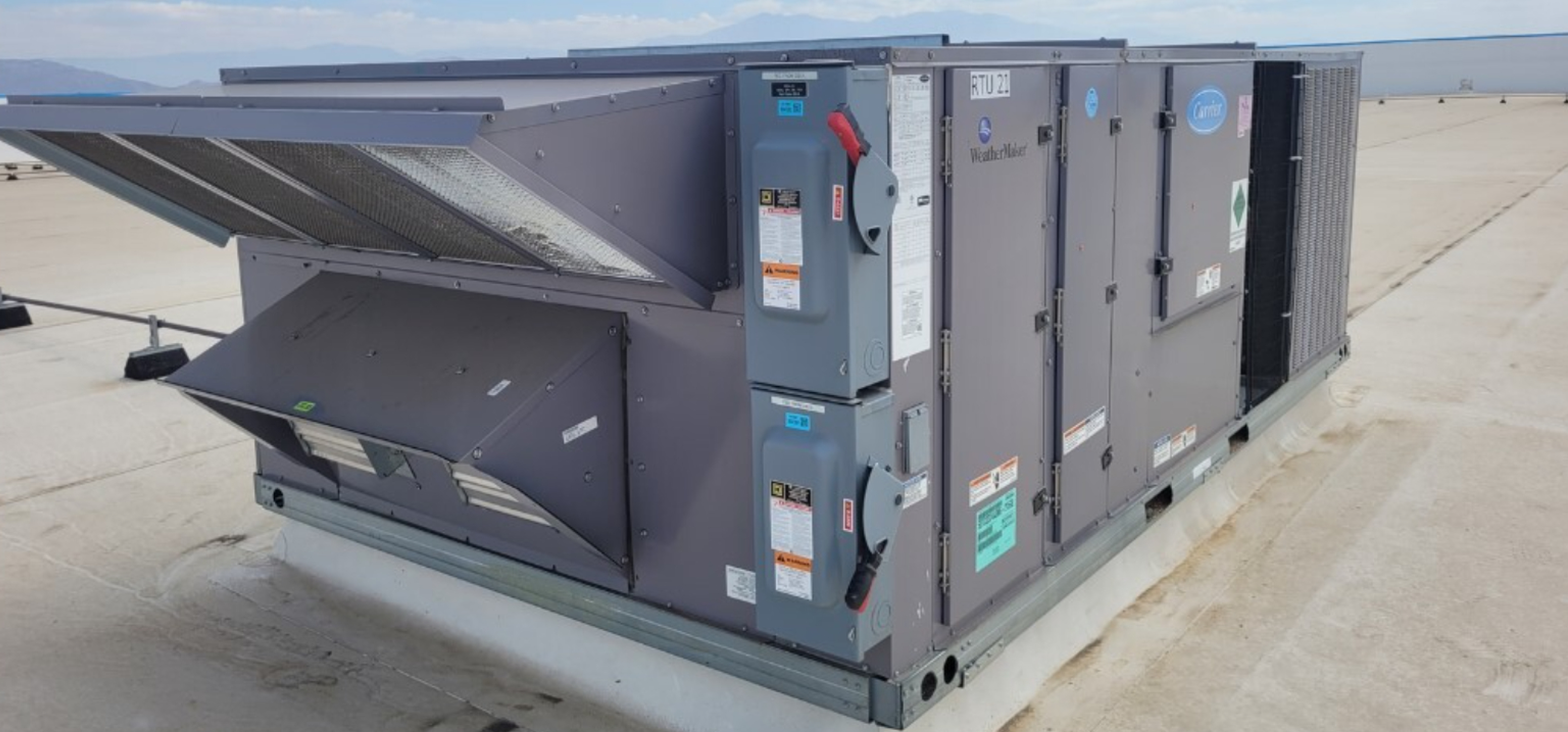
Buildings—whether your home, office, or the warehouse that holds the items you just ordered from Amazon Prime—need a way to keep people (and sometimes products and machines) comfortable and healthy. Rooftop units (RTUs) are the most common heating, ventilation, and air conditioning (HVAC) systems used by large buildings across the globe.

RTUs work by drawing in outside air, conditioning it, and sharing it throughout a building. Most RTUs use natural gas for heating. As with the systems you use to heat water or power your stove at home, natural gas has traditionally been the default option due to its cheaper cost per unit of energy and greater reliability in cold climates. But research has shown that electric equipment can deliver 250% to 450% greater energy efficiency compared with gas equipment, according to the National Laboratory of the Rockies. With an estimated 15 million RTUs in commercial buildings in the U.S., these units collectively represent substantial opportunities to reduce costs and improve energy performance.

Sophisticated controls on RTUs can help optimize system performance, reducing emissions and costs. In the future they’ll also be able to communicate with utilities, creating community-level impacts and savings.
A new wave of technologies is making this improvement possible, and businesses are leading the way. Amazon, other signatories of The Climate Pledge, and owners of large portfolios are collaborating with equipment manufacturers to develop, test, and commercialize all-electric models that have the potential to help reduce emissions and cut energy costs across the country.

Heat pumps for big buildings

More than four years ago, engineers within Amazon’s Operations and Sustainability teams saw an opportunity to efficiently reduce the company’s costs and energy consumption related to building heating and cooling. Amazon owns or operates thousands of buildings and tens of thousands of RTUs. In addition to running on natural gas, many units had outdated controls and inefficient cooling systems.

Colleagues from across engineering and sustainability had a “think big” idea: What would it take to motivate RTU manufacturers to fast-track new technologies—to make lower-carbon units with sophisticated controls available at cost parity? The concept started with Beth de la Peña Ritzert, a senior technical program manager on Amazon’s Enterprise Building Management System team. de la Peña Ritzert focused Amazon on engaging manufacturers to develop cold-climate heat-pump RTUs that would be “adaptable to a wider variety of climate conditions.”

“We realized that if we could buy a more efficient, more sustainable rooftop unit for our buildings, that’s a lot of our energy and cost challenge solved in one purchase,” said Andrew Rhodes, a principal sustainability engineer at Amazon. “But it’s easier said than done—you can’t buy what manufacturers don’t sell.”

Sending a demand signal

Amazon’s demand alone wasn’t enough to encourage equipment manufacturers to innovate faster. But other companies with similar goals were also interested in innovative solutions.

So Amazon took the lead. Working with other owners, manufacturers, and government agencies, Amazon created a specification for next-generation RTUs and presented HVAC manufacturers with a clear, unified message: Build us a better rooftop unit, and we’ll buy it. Together, this coalition challenged manufacturers to create efficient all-electric and dual-fuel models with a focus on the unit’s ability to generate heat in cold climates. “By aligning on a single specification that multiple companies are interested in adopting, we’ve given manufacturers a single target to aim at, so they can efficiently address customer needs and are motivated to do so,” Rhodes said.

The manufacturers delivered. Since 2025, major RTU manufacturers have developed 11 prototypes known as advanced rooftop units (ARTUs) that can operate in cold climates, with integrated controls and metering so building owners can adjust the temperature as needed. Participating manufacturers include AAON, Addison, Carrier, Daikin, Johnson Controls (York), Lennox, LG, Rheem, and Trane Technologies. Three companies have commercially available units; one company entered the market specifically because of the initiative.

Building these prototypes was no small feat. Manufacturers had to assemble components that, in many cases, weren’t yet available to buy. It can take years for manufacturers to research which new technologies to deploy, and another three or more years before a commercialized version reaches the market. By building shared interest around a common specification and working collaboratively with large building owners, the coalition was able to compress that timeline significantly.

Piloting prototypes
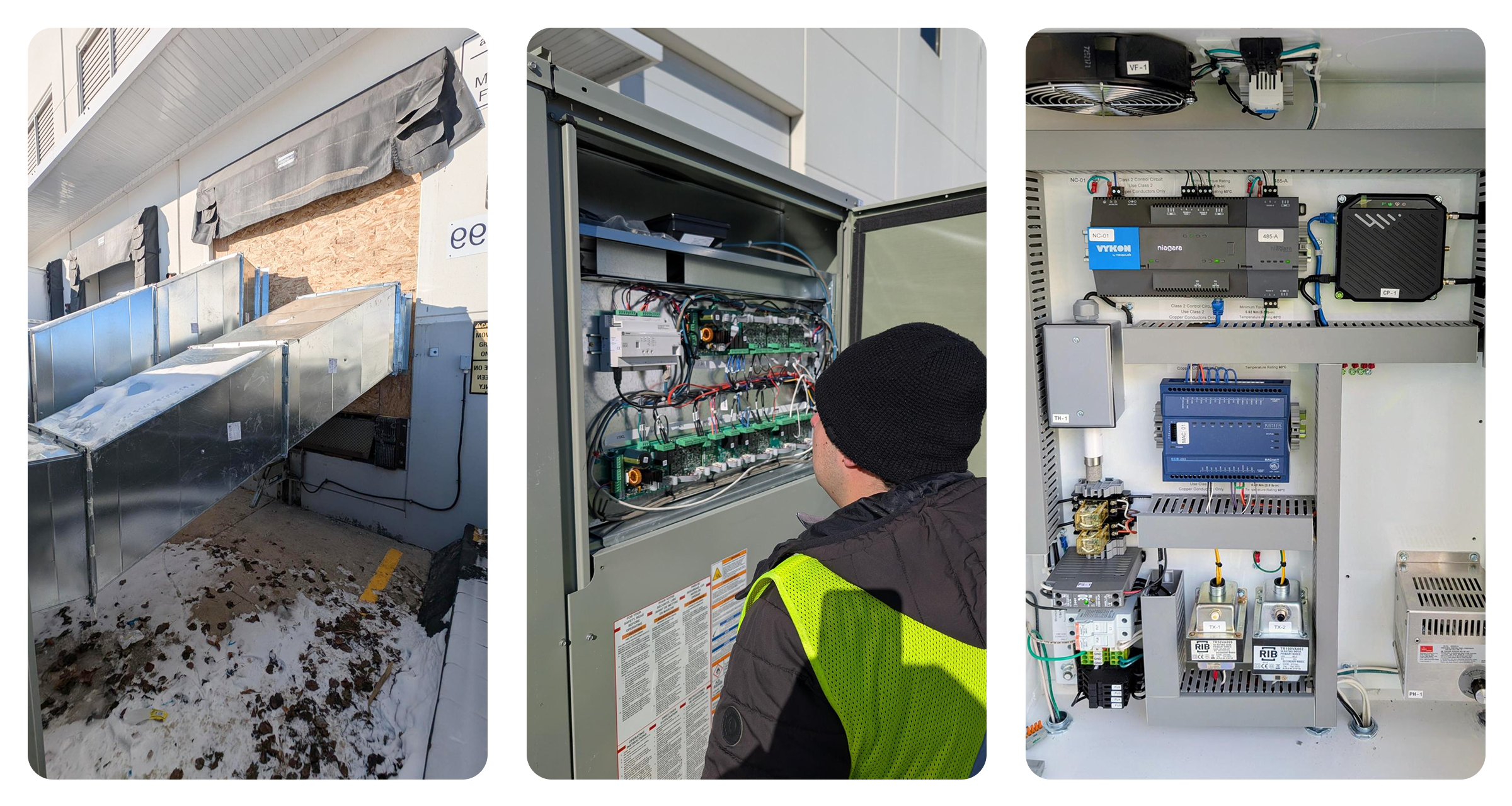
Team members check on the “Kenosha Kicker,” a prototype unit being piloted at an Amazon building in Kenosha, Wisconsin.
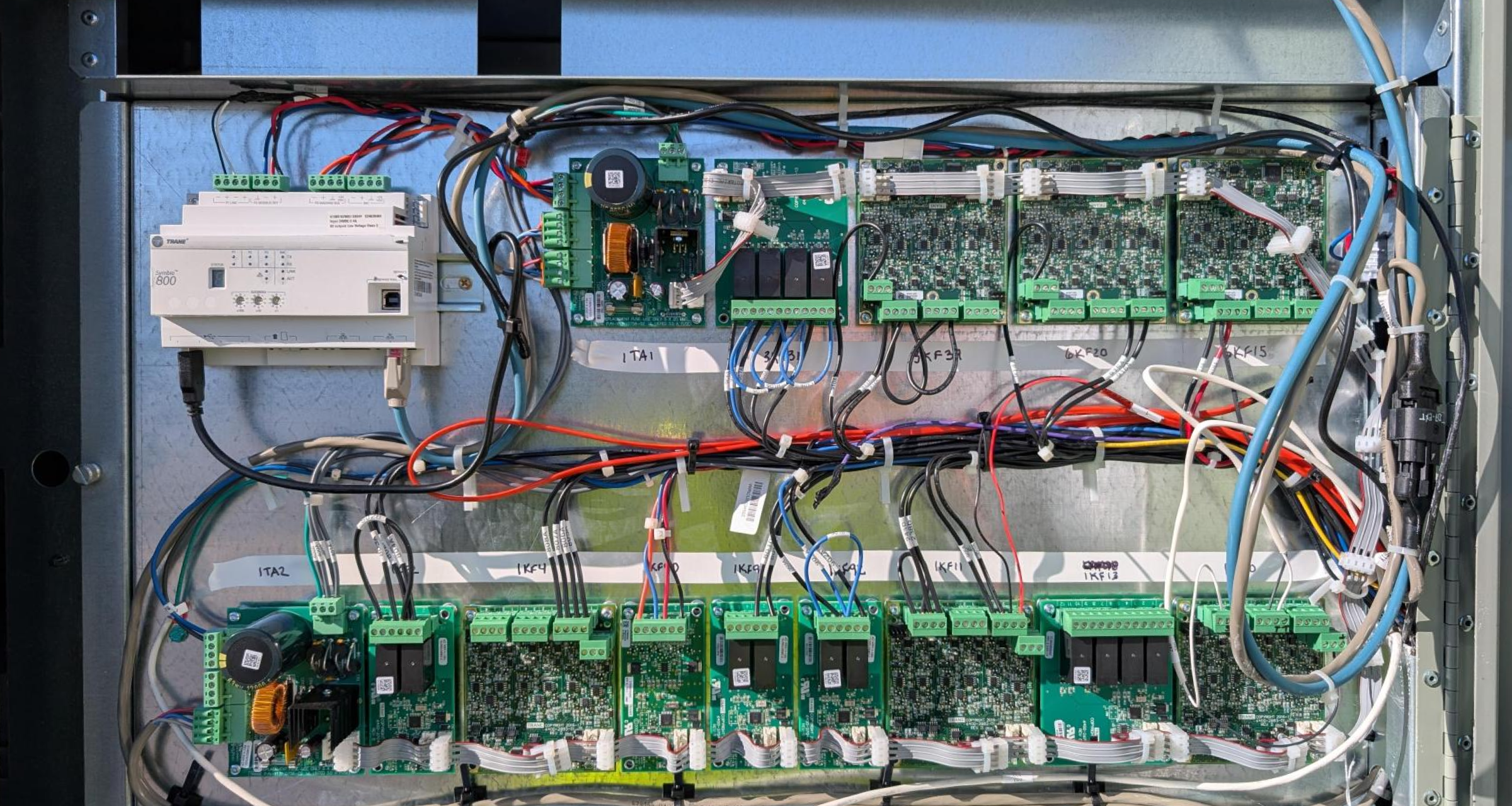
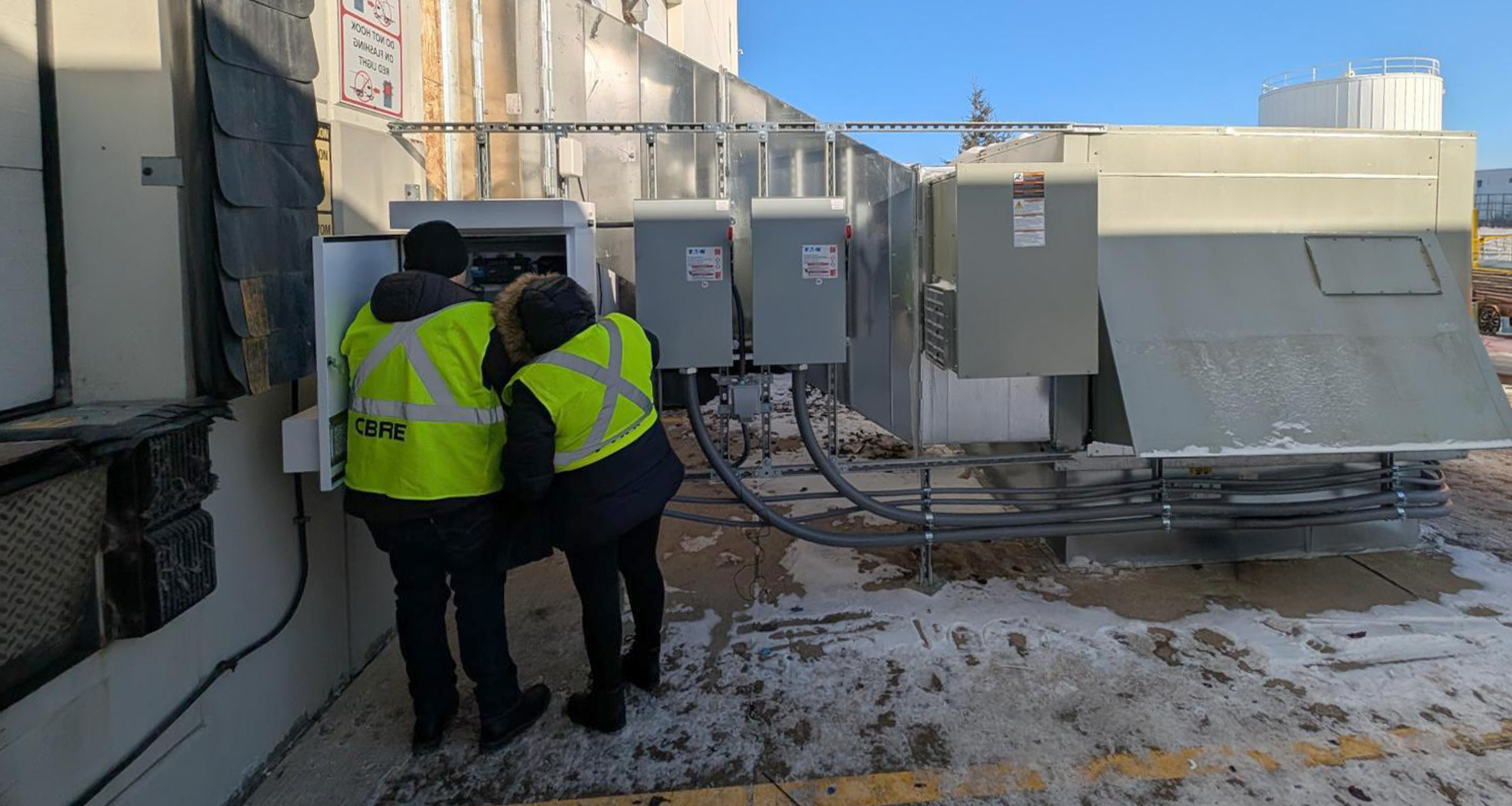
Amazon isn’t just convening the industry to help advance this initiative—it’s putting prototypes on its own rooftops. There are now 11 ARTUs being piloted by Amazon and other companies at buildings across the country, including a cold-climate model at an Amazon fulfillment center in Kenosha, Wisconsin—a 20-ton all-electric heat pump unit from Trane Technologies, lovingly dubbed the “Kenosha Kicker.”

The Kenosha pilot, installed in early 2026, is actively monitored to validate performance in real-world conditions over two or more years. Additional pilots are due to come online across Amazon’s global facilities and with other companies in the coalition.

The initiative is gaining momentum. In 2026, working through The Climate Pledge, Amazon convened a coalition of major building owners and operators—including Prologis, Walmart, Target, Starbucks, DaVita, and Lifetime—to pool demand and increase commercial availability of ARTUs.

What’s next

When deployed at scale, industry analysis estimates the rooftop units could save American businesses $5 billion on utilities each year.

The coalition and The Climate Pledge are planning future phases that will include scaling up deployment of prototype models, development of a common specification to further align owners and manufacturers, and a technology incubator for new innovations such as non-refrigerant, solid-state equipment.
Manufacturers built brand-new prototype ARTUs in the first phase of the initiative. The Climate Pledge and coalition partners hope to encourage further innovation in future phases.

The initiative is already seeing success. “Manufacturers are participating in the program; they’re building innovative prototypes and doing the pilots, and some are commercially available now,” Rhodes said. Participating companies are continuing to test a greater number of units at a variety of building sites to ensure this technology will be able to support long-term success in their fleets. 

Amazon is eager to continue developing new technologies within the group, including the use of AI in equipment controls, units with lower global-warming-potential refrigerants or non-refrigerant technology such as caloric cooling, models designed for hot and humid climates, and smaller units for use by small-to-medium buildings like Whole Foods Market properties.

Innovation must be continuous. “We need to increase joint efforts between owners and RTU manufacturers to complete pilots with prototypes of cold-climate heat-pump RTUs,” de la Peña Ritzert said. “Owners need to continue to voice their goals and provide lessons learned back to RTU manufacturers for a feedback loop of continuous improvement. We need to keep innovation at the forefront and never settle for current state.”

“We are pooling our resources, and we’re starting to see what the next generation of rooftop units looks like,” Rhodes said. “Each change we make means everyone can buy better units. This is what happens when companies with a shared commitment come together and say, ‘Let’s solve this.’”

Learn more about the advanced rooftop unit initiative and joint action project.

Read The Climate Pledge Report.