
Nov 18 2026 - Global

Lime’s head of sustainability on driving decarbonization at scale

Innovation Transportation Sustainability

By Andrew Savage

/

Vice President of Sustainability and Founding Team Member, Lime

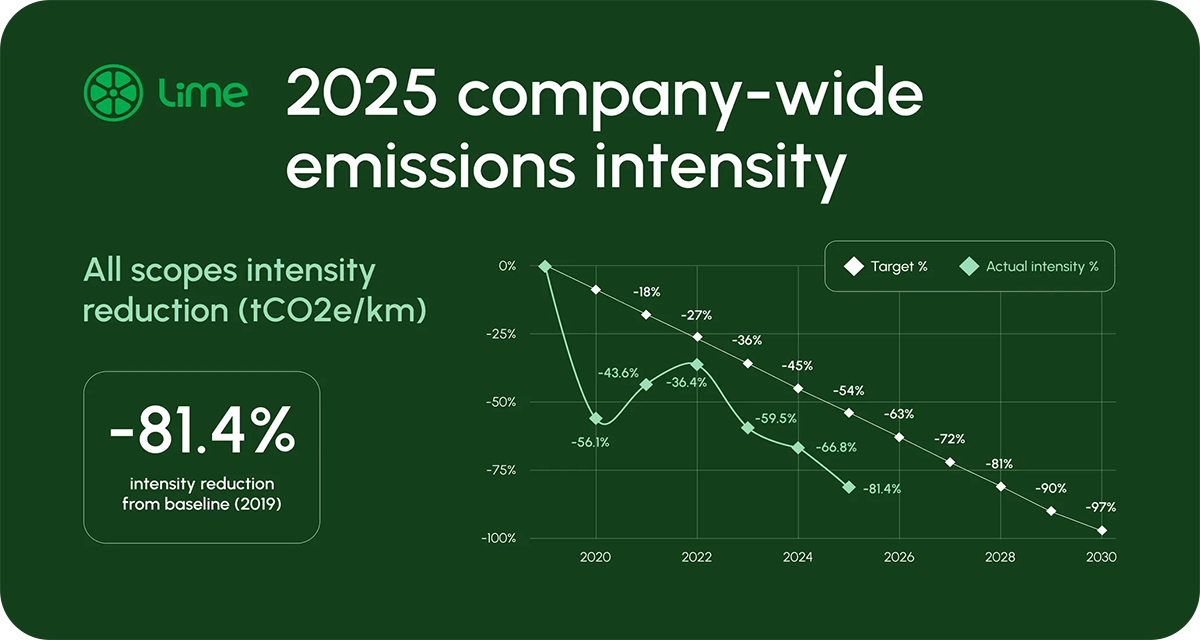
Cutting carbon emissions doesn’t happen overnight. Lime's 81.4% reduction in carbon intensity since 2019 is the product of years of small, deliberate steps that compounded into transformational results. 

The views expressed in this essay are those of the author.

In sustainability, there’s typically not one easy, practical action a company can do to help it reach net-zero carbon emissions. Instead, success is more likely to come from a series of steps, building on progress, which can add up meaningfully over time.

At Lime, we know that small changes can lead to big impacts. After all, we’re a company founded on the notion of providing hundreds of thousands of 1- and 2-mile e-bike and e-scooter trips daily. And, as the largest global shared micromobility company, we’ve provided a lot of them: Our riders have taken 1 billion rides and we’ve helped them avoid more than 176 million car trips since our inception in 2017.

These milestones were almost inconceivable when we started the company. However, over the last nine years, we’ve scaled the business, introduced new vehicle types, and found ways to meet our customers where they are by becoming a dependable service to cities and riders alike. We’re now an integral part of transportation networks around the world. 
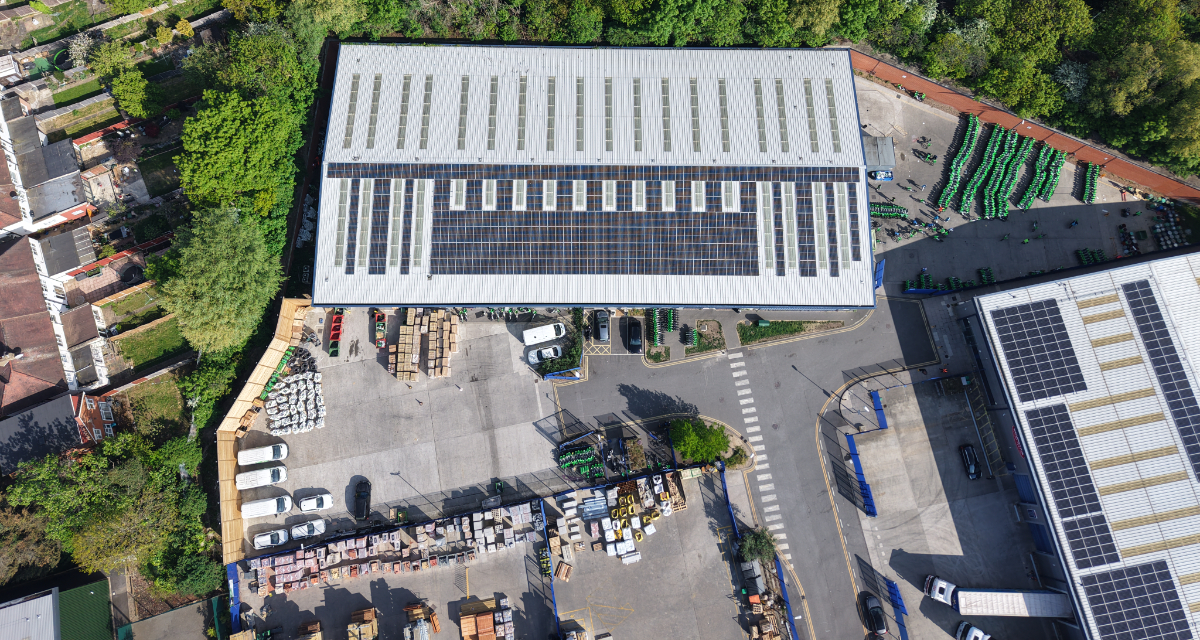
Solar panels on Lime’s London warehouse contribute to the company’s 100% renewable energy commitment. (Photo Credit: Lime)
Look at London, where over the last five years, cycling has grown to dominate the streets. Biking now represents the city’s majority mode of transport during the daily commute, with 56% of all peak commute journeys taking place on two wheels. Recent Transport for London (TfL) data shows around 1.5 million trips are made each day, with 10% taken on dockless rental e-bikes, of which Lime is the majority.

Taking incremental steps that add up to significant change extends to our decarbonization efforts as well.

We set an ambitious target in 2019 to reach net-zero carbon emissions by 2030, which was validated by the Science Based Targets initiative (SBTi). We knew setting such a rigorous goal was the right direction for the company, but we candidly acknowledged that it would be ambitious to achieve it.

To reach our climate goals, we knew that companies would need to demand and industries would need to provide decarbonization solutions to support our efforts. We couldn’t do it alone; joining The Climate Pledge in 2021 was thus a natural step. As a signatory, we’ve shared insights and signaled demand with other like-minded organizations, including being a founding member of the Electrifying Drayage Alliance. And we’ve joined a global rallying cry advocating for the climate future we want to see. 
While we acknowledge that we have plenty of work ahead, last year, we posted an 81.4% company-wide carbon intensity reduction since setting that target. That progress put us four years ahead of our Scope 1 and 2 emissions target, and two years ahead of our Scope 3 emissions target. We didn't achieve this by swinging for the fences, but by finding small wins and building on our successes. In 2025, when we posted our largest improvement yet, it became clear that efforts like working with our supply chain to reduce carbon emissions paid dividends. These small steps blossomed into bigger initiatives, with even greater carbon impact.
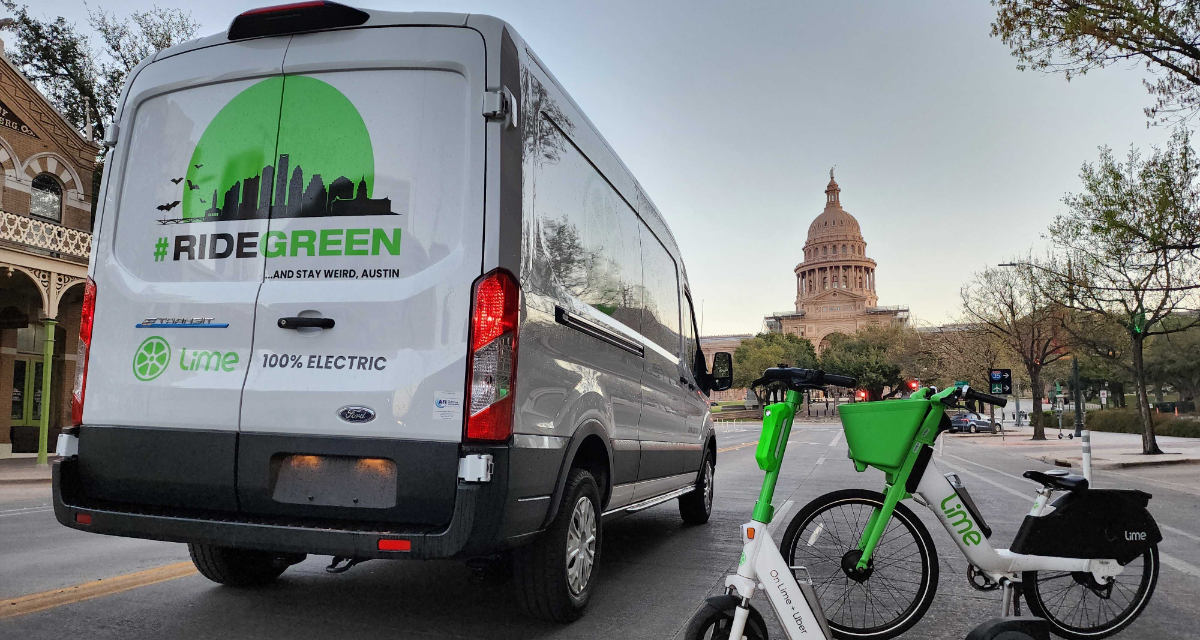
An all-electric van that’s part of Lime’s operations fleet. (Photo Credit: Lime)
Freight
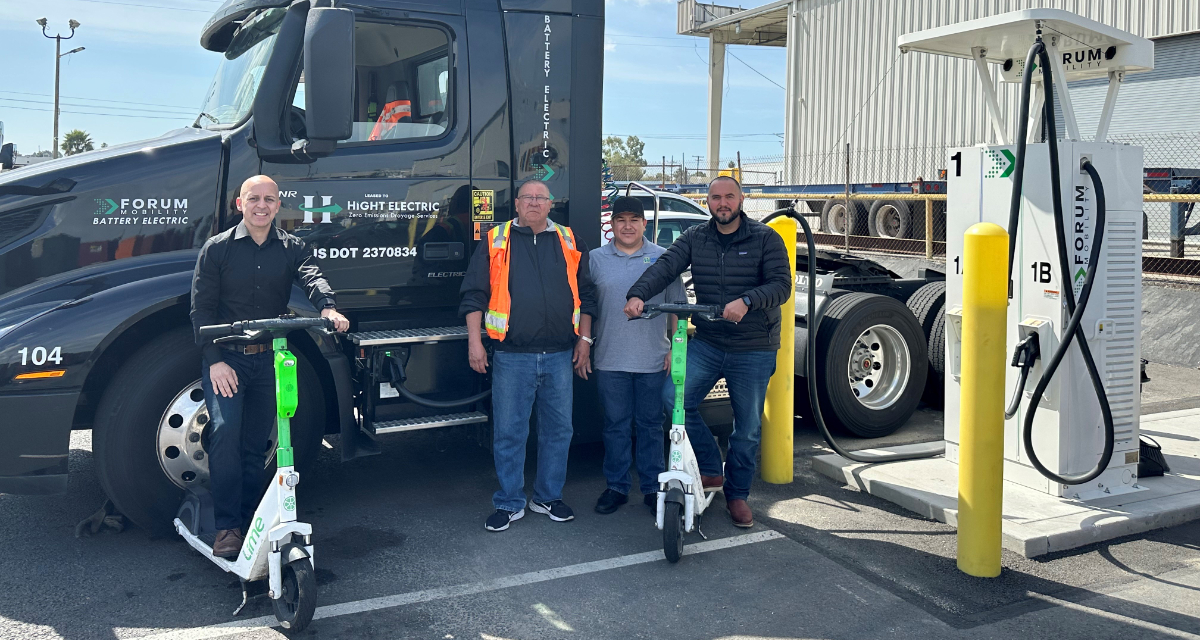
Take, for example, freight logistics: In 2024, we began piloting electric drayage at the Port of Los Angeles for inbound shipments of new shared vehicles and spare parts approximately 50 miles from the port to our nearby hub. By 2025, this pilot led to over 300 of these hauls, all on electric trucks. The notion that we could successfully find ways to cost-effectively scale lower carbon trucking took root. As we launched a similar initiative at the port in Amsterdam with HVO100—a type of renewable diesel with 90% lower carbon emissions than traditional diesel—we found this renewable fuel could also help us deliver new vehicles and parts to the cities we serve across Europe. In 2025, we used these renewable-fueled deliveries to serve more than 25 European cities, and 350 individual hauls, from points as far off as Paris, Stockholm, and Athens.

Sourcing
We saw a similar path with our strategic sourcing of lower-carbon materials. Identifying that our hardware—e-bikes, e-scooters, seated e-scooters—was our largest carbon impact, and aluminum the largest component in our hardware, we began working with suppliers in 2022 and 2023 to source key components with lower-carbon aluminum produced using renewable energy. What started as an initiative with just a few of our major components, like frames and handlebars, in 2025 expanded to nearly two dozen major parts. We then extended that effort with other suppliers to find lower-carbon ways to produce battery cells. The combined effort led to a 25.3% carbon reduction per unit average in 2025 for batteries, e-bikes, and e-scooters. 
Switching to HVO100 (hydrotreated vegetable oil) for its European logistics activities is one of the ways that Lime is actively decarbonizing its supply chain. (Photo Credit: Lime)
Renewables
When we first introduced e-bikes into our fleet, we made a commitment to power their batteries on 100% renewable energy, no matter where in the world they were charged. That commitment stands today, and in 2022, we extended that commitment to our global facilities, including warehouses and offices, cutting our Scope 2 market-based emissions to zero. In 2025, we consumed more than 10,000 mega-watt hours over 100 facilities and powered the batteries for our average operational fleet of over 325,000 vehicles. 

It’s the combination of these initiatives that has put Lime on pace to reach net-zero carbon by 2030, a full decade ahead of our Climate Pledge commitment and 20 years ahead of the Paris Agreement. We’ve learned that the results add up when we treat decarbonization not as a single moonshot but as a relentless accumulation of smart, scalable actions across the entire value chain.  

Learn more about Lime’s net-zero carbon roadmap.  

Learn why Lime signed The Climate Pledge.