
Story 19 - Sep 30, 2026 - New York, New York

Just back from: The Climate Pledge Hub at Climate Week NYC

Innovation

By Kara Wallace DeGooyer

/

Media & Comms, The Climate Pledge

From the announcement of new coalitions and joint action projects to conversations spanning fashion, water, freight, and more, here’s what happened at The Climate Pledge Hub during Climate Week NYC 2026.

Climate Week NYC is about turning shared ambition into collective action and this year, The Climate Pledge community had plenty to put into motion. 

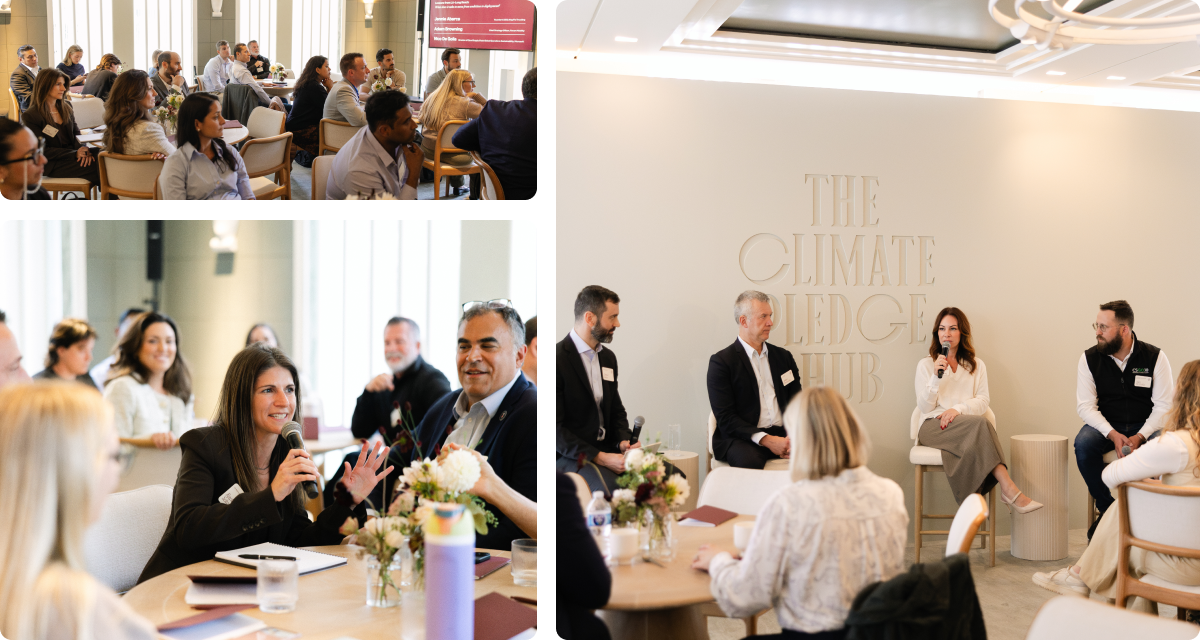
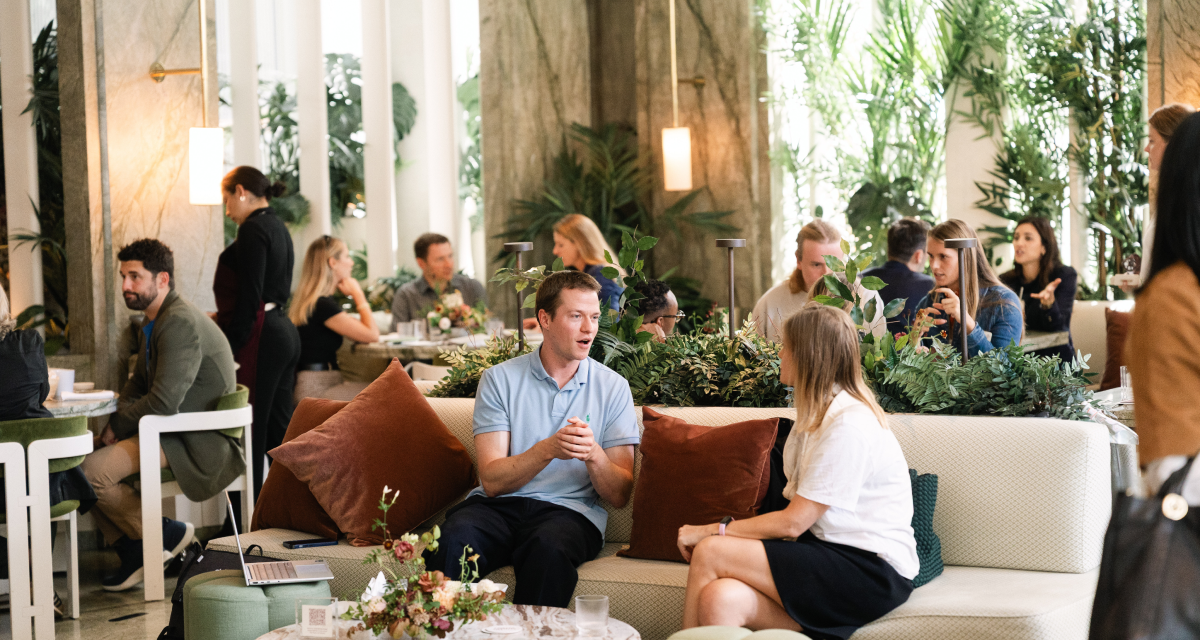
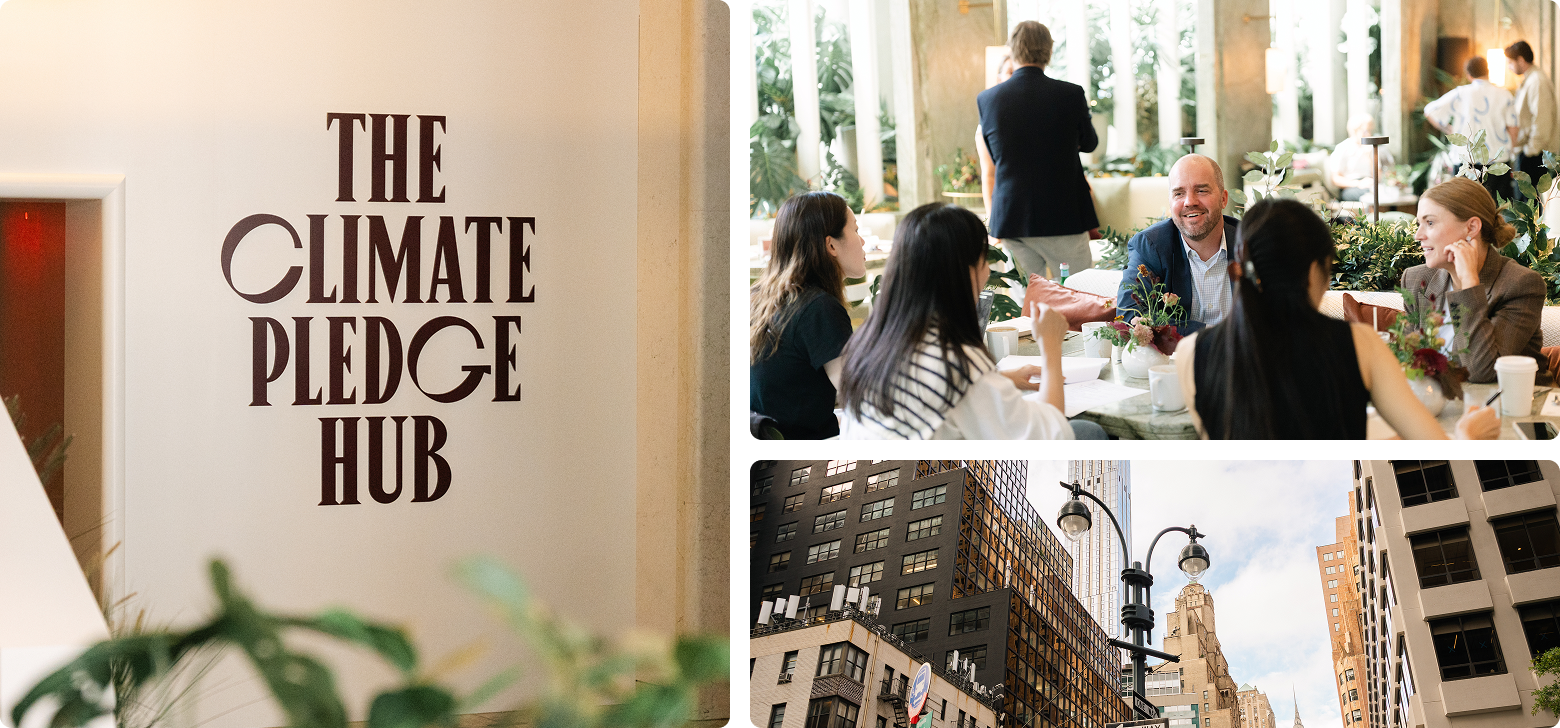
Over five days, 650 signatory representatives and invited guests gathered at The Climate Pledge Hub in New York, which served as a home base for participants to meet, build relationships, and dig into some of the biggest questions facing the companies working to reach net-zero carbon emissions by 2040.

Leaders convened to discuss pressing topics like AI, water, fashion, freight, supply chains, and climate solutions in 39 sessions. From interactive workshops and working sessions to panels and a live podcast recording, attendees focused on sharing what’s working, tackling common barriers, and finding opportunities to move faster together.

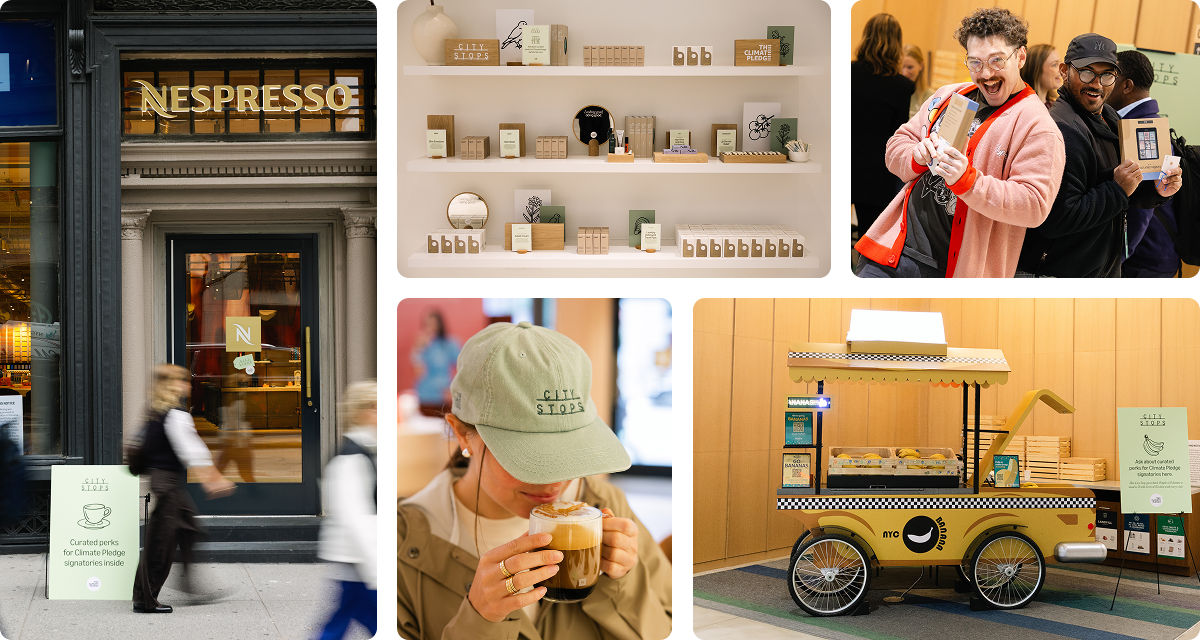
The week stretched beyond the walls of The Hub, too. The first-ever “City Stops” brought The Climate Pledge community to locations across Manhattan, creating more ways for signatories to connect, recharge, and experience Climate Week throughout the city.

Read on for the announcements, conversations, and moments we’re still talking about.
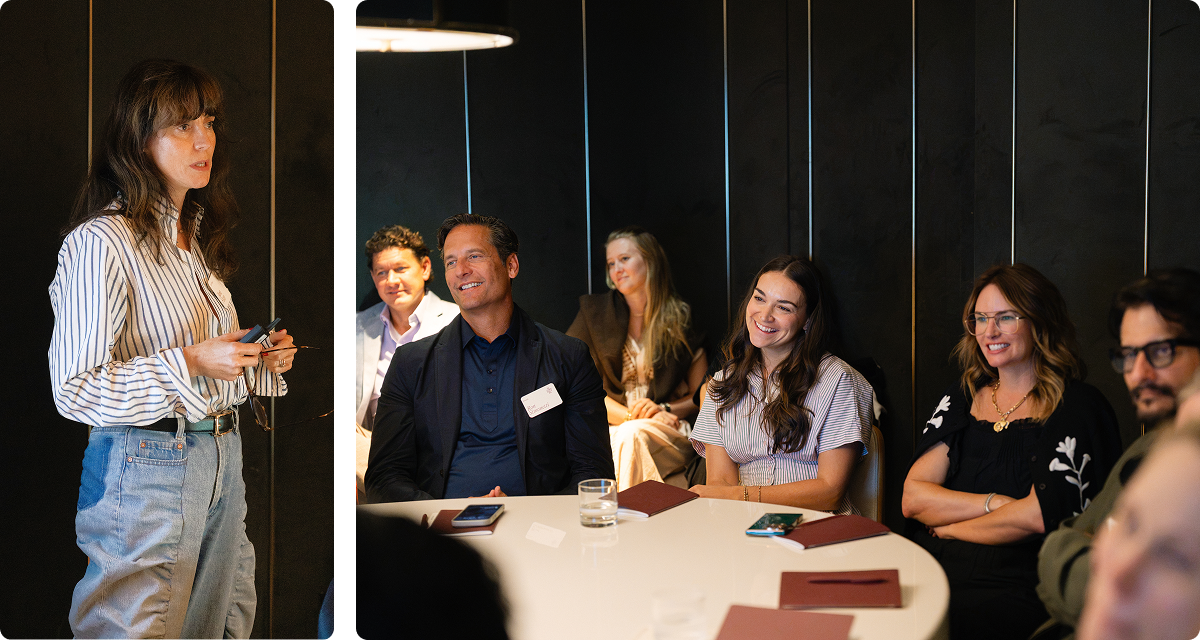
In the "Redefining EPR: Intercepting surplus before it becomes waste" session, participants gained a practical framework for evaluating which circular pathways fit their production model.

A new coalition takes on fashion’s toughest barriers

The launch of The Climate Pledge Fashion Coalition was one of the biggest announcements of the week. This new cross-industry initiative aims to help more sustainable materials, technologies, and lower-carbon supply chains reach commercial scale. It was co-founded by The Climate Pledge alongside Amazon, Stella McCartney, and Canopy, with convening support from the World Economic Forum. 

The coalition brings together more than 60 Climate Pledge signatories across the fashion value chain, including brands, retailers, manufacturers, and innovators.

Many of the solutions needed to reduce fashion’s environmental impact already exist, but cost, availability, fragmented supply chains, and gaps in manufacturing infrastructure can keep them from scaling. The Fashion Coalition is designed to help address those barriers by structuring financing to encourage investment, connecting signatories with solutions, and informing policy.

Coalition members gain access to the Fashion Coalition Lever Library, which maps more than 100 proven and emerging solutions across the value chain, with fiber-by-fiber guidance and a directory of innovators.

At The Hub, conversations around fashion and circularity continued with “Redefining EPR: Intercepting surplus before it becomes waste,” a roundtable exploring how the industry can rethink surplus before products enter the waste stream.

Play
Watch now

Amazon launched a collaborative with a two-year objective of raising $100 million to support the Colorado River.

Bringing collective action to the Colorado River

Water resilience was another major focus of the week.

Amazon launched the Colorado River Basin Collaborative (CRBC) and announced a $20 million investment in water conservation projects across the basin. Amazon also joined the Water Resilience Coalition, which will help manage the program. Participating companies have voluntarily committed more than $32 million toward a collective objective of mobilizing $100 million over two years. The collaborative is actively recruiting additional companies to participate and help reach that goal.

The Colorado River serves 40 million people, 30 tribal nations, and 5.5 million acres of farmland across seven U.S. states and Mexico. After 25 years of severe drought, its largest reservoirs are below 30% capacity.

The initiative is designed to help turn corporate interest into action more quickly. Rather than pooling contributions into a single fund, participating companies can independently fund vetted projects across the basin, from irrigation efficiency and water-loss reduction to watershed restoration. The Climate Pledge is helping connect companies interested in participating with opportunities for action.

Participants discussed water resilience during “Water is the next climate risk you can't ignore,” which inspired conversations about the connection between water, climate resilience, and business—and what companies can do.

Learn more about joining the Water Resilience Coalition.

For the first time ever, “City Stops” provided new ways to engage with signatories around Manhattan.

Taking The Climate Pledge beyond The Hub

We extended The Climate Pledge experience beyond The Hub this year with our first-ever “City Stops,” which was designed to bring curated experiences to signatories and the broader Climate Week community at eight locations across Manhattan with 17 participating brands. 

To celebrate and support signatories throughout Climate Week, Hub attendees were invited to pick up a gift bag at Whole Foods Market, recharge with a coffee tasting at Nespresso, shop with an exclusive discount at Faherty, discover products from five participating brands at the Another Tomorrow Beauty Bar, start the day with nearly 100 runners at Greenly’s Run for Net Zero, and more.

Amazon Chief Sustainability Officer Kara Hurst joined the fun with a surprise giveaway at Amazon’s Banana Stand, distributing 100 Kindle Colorsoft devices to celebrate Climate Week.

Through financial technology company Ripple, visits to Whole Foods Market, Nespresso, and the Banana Stand generated donations to World Central Kitchen to help provide nourishing meals to communities in need.

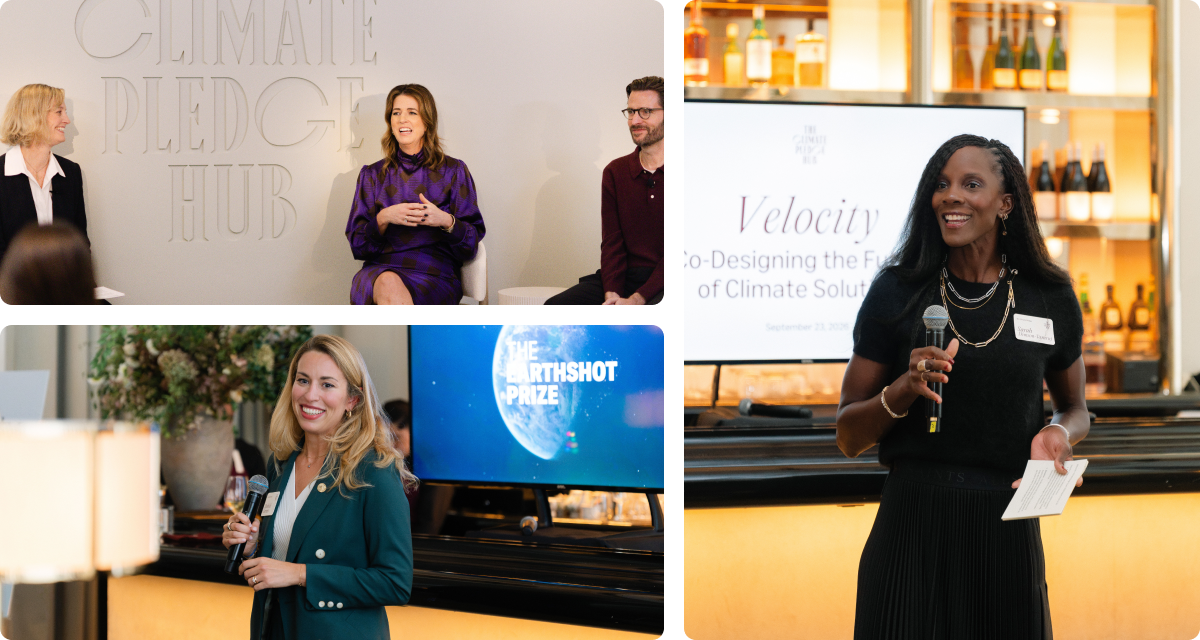
Participants discussed how to scale late-stage climate solutions in the “Velocity: Co-designing the future of climate solutions” session. Hurst later joined The Earthshot Prize CEO Jason Knauf and GeekWire’s Lisa Stiffler to tackle the same topic in a live taping of GeekWire’s “Positive Charge” podcast.

Taking proven climate solutions further with Velocity

One question continued to surface throughout the week: How do we help climate solutions that already work reach more customers and industries—and scale operations? 

That question is at the heart of Velocity, a nine-month joint action initiative led by The Climate Pledge in collaboration with The Earthshot Prize, Amazon Web Services (AWS), and Plug and Play Sustainability Ventures.

The application-based program focuses on scaling solutions across specific industries. Velocity 2027 centers on two areas: materials innovation (waste sortation, bio-based materials, building materials, and more) and energy independence (energy storage, energy optimization, and cooling tech).

Four late-stage climate solution providers working across materials innovation and energy independence will be selected and connected with corporate partners, strategy consultants, academic research partners, potential investors, AWS sustainability architects and builders, and The Climate Pledge’s network of over 700 signatories. Each participant will also receive up to $100,000 in AWS promotion credits.

Applications for the 2027 program opened during Climate Week and will close November 6. Program participants will be announced in January 2027.

The conversation continued at The Hub during the “Velocity: Co-designing the future of climate solutions” session, and again during a live recording of GeekWire’s “Positive Charge” podcast. Hurst joined The Earthshot Prize CEO Jason Knauf and GeekWire’s Lisa Stiffler to dig into the challenge of moving proven climate solutions from successful pilots to broader commercial adoption.

Participants got a first look at how the Electrifying Drayage Alliance aims to scale electric trucking by 2030 in a session on electric freight.

Electric freight gains momentum

With diesel prices high, Climate Week brought fresh attention to electric freight and a milestone for the Electrifying Drayage Alliance (EDA): the launch of its 2030 Roadmap for the ports of New York and New Jersey. The roadmap charts a path to deploying at least 300 battery-electric drayage trucks in the port region by 2030, focusing on building freight demand, preparing carriers and charging infrastructure, improving port and terminal operations, creating supportive market conditions, and tracking deployment. 

At The Climate Pledge Hub, “Coast to coast: The electric freight playbook,” brought together EDA members and Climate Pledge signatories. Speakers from the Los Angeles-Long Beach coalition and the New York-New Jersey coalition shared lessons on scaling electric drayage. Leaders from the Port Authority of New York and New Jersey also joined the discussion. Together, the presenters drew on deployment experience from Southern California to identify how those lessons can accelerate progress in New York and New Jersey.

The session connected electric trucking companies directly with major global brands to explore how electric capacity can fit into their freight operations. Those conversations reinforced a central theme of the roadmap: Scaling electric drayage requires freight customers, carriers, charging providers, ports, financiers, and policymakers to move together.

Read more about the Electrifying Drayage Alliance.

The conversations that began at The Climate Pledge Hub continue after the event concludes.

From Climate Week to what comes next

Climate Week provides a rare opportunity to work toward the same goal in one place. But the real measure of the week is what happens after everyone heads home.

The conversations that started in New York don’t end there. They become new partnerships, next steps, and opportunities to keep moving forward together.

Find more coverage of The Climate Pledge Hub at Climate Week NYC on LinkedIn.

Read more event recap articles in our Just Back From series.

All photos taken by
Alex Wysocki Photography.